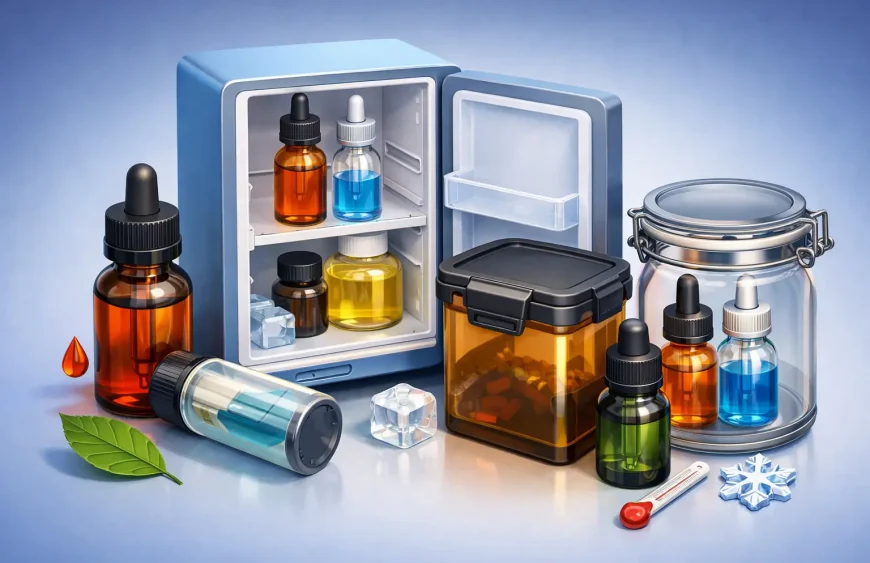
A bottle left on a sunny windowsill can lose its fresh flavor long before you finish it. Knowing how to store e liquid properly protects the taste, nicotine strength, and consistency you paid for, whether you use ready-to-vape nic salts, freebase juice, or DIY mixing supplies.
The basic rule is simple: keep e-liquid cool, dark, tightly sealed, and out of reach of children and pets. The details matter, though. Storage needs can change depending on whether a bottle is unopened, already in rotation, or part of a larger DIY nicotine stash.
How to Store E Liquid: The Four Main Rules
E-liquid has a few natural enemies: heat, sunlight, oxygen, and contamination. None of them will instantly ruin a bottle, but repeated exposure can speed up flavor loss and nicotine oxidation.
Store bottles in a cool place. A dry cabinet, closed drawer, or storage box away from radiators, ovens, and direct sun is usually ideal. Normal indoor room temperature works well for daily-use bottles. Avoid leaving e-liquid in a car, especially during summer. A hot car can turn a quick errand into hours of heat exposure, and high temperatures may thin the liquid enough to cause leaks.
Keep it away from light. Direct sunlight is the biggest issue, but strong artificial light is not great for long-term storage either. UV exposure can degrade nicotine and affect delicate flavor compounds. A dark cupboard is better than an open shelf. If your bottles are clear, putting them inside an opaque box adds another layer of protection.
Keep caps and nozzles sealed. Every time air enters the bottle, it creates an opportunity for oxidation. You do not need to obsess over opening a bottle to refill your pod or tank, but do close it promptly and securely. Check that the child-resistant cap is fully tightened and the nozzle is clean before putting it away.
Keep bottles clean and upright. Store e-liquid standing up whenever possible. This reduces the chance of seepage around the cap and makes labels easier to read. Wipe away any residue on the bottle, nozzle, or cap. Sticky buildup can attract dust, make caps harder to open, and transfer old flavors onto your hands or devices.
What Heat, Light, and Air Do to E-Liquid
Most e-liquids contain propylene glycol (PG), vegetable glycerin (VG), flavorings, and sometimes nicotine. These ingredients are stable when stored correctly, but they do change over time.
Nicotine can gradually oxidize after exposure to oxygen, light, or heat. The liquid may become darker, especially in high-nicotine products, and the flavor can become less crisp. A slight color change is common and does not automatically mean the e-liquid is unusable. Nicotine salts and freebase nicotine can both darken naturally. What matters more is whether the liquid smells off, has an unusually harsh taste, or shows major changes in texture.
Flavor is often the first thing people notice. Bright fruit, mint, and cooling profiles can fade faster than heavier dessert, tobacco, or cream blends. Heat can also change how flavor notes come through. If a favorite juice suddenly tastes flat, storage may be part of the reason.
VG-heavy e-liquids can thicken in cooler conditions, while heat makes them thinner. A thick 70VG or max-VG blend may need a gentle shake before filling. Do not microwave e-liquid or place it in hot water to thin it. Let the bottle return naturally to room temperature instead.
The Best Place for Daily-Use Bottles
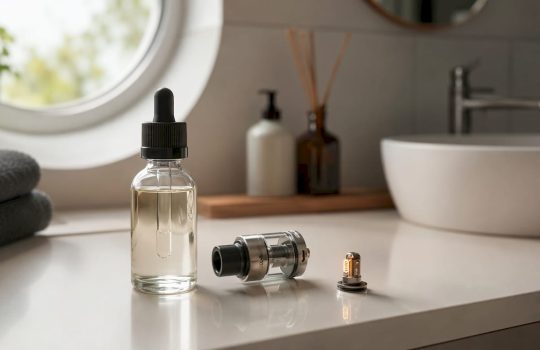
For a bottle you are using regularly, a closed drawer or cabinet in a cool room is the practical choice. Choose a spot that is dry, shaded, and not within easy reach of children, pets, or visitors. A lockable storage box is a smart upgrade for households with children.
The kitchen is not always the best option. Cabinets close to an oven, dishwasher, coffee machine, or sunny window can get warmer than expected. A bathroom cabinet can also be a poor fit because showers create frequent heat and humidity. A bedroom drawer, hallway closet, or dedicated lockable organizer is often more consistent.
If you carry a small bottle when you are out, use a protective case or a zip pouch and keep it upright. Do not leave it in a backpack that sits in the sun or in a glove compartment. For travel, make sure the cap is secure and place the bottle in a separate sealed bag in case pressure changes or heat cause a leak.
Should You Refrigerate E-Liquid?
For most everyday e-liquid, refrigeration is not necessary. A cool, dark cupboard is easier and more reliable for bottles you open often. Refrigerators can introduce condensation when bottles are taken in and out, and the kitchen should never be used as casual storage for nicotine products near food or drinks.
Long-term storage is different, particularly for experienced DIY users holding nicotine base or larger quantities of unopened supplies. Some mixers choose refrigerated or frozen storage for sealed nicotine base to slow oxidation over an extended period. If you take this route, use an airtight secondary container, label every bottle clearly, keep it locked away, and separate it completely from food. Allow the bottle to return to room temperature before opening it to reduce condensation inside the container.
Freezing is not a practical answer for a daily vape bottle. It adds hassle, changes viscosity, and does not replace careful labeling and safe storage. Buy quantities you can reasonably use, then restock during Fresh Deals rather than keeping more nicotine liquid than you can manage safely.
Unopened Bottles vs. Opened Bottles
An unopened bottle generally stays fresher longer because it has had less contact with air. Keep the factory seal intact until you are ready to use it, and do not remove shrink bands or inner seals early just to inspect a bottle. Check the printed best-before date and rotate your stock so older purchases are used first.
Opened bottles deserve a little more attention. Close the cap right after filling, do not leave it uncapped while rebuilding a coil or mixing several flavors, and avoid touching the nozzle to dirty surfaces. If you use multiple flavors, keep each bottle in its own clearly labeled position. That saves time and prevents the classic mistake of grabbing 20 mg nic salt when you meant to fill a low-strength freebase tank.
DIY mixes need especially clear labels. Write the flavor name, PG/VG ratio, nicotine strength, mixing date, and any steeping notes. A plain bottle with no label is not a mystery to solve later. It is a safety risk and a waste of product.
Store Nicotine Products With Extra Care
E-liquid containing nicotine is for adults only and should be handled with care. Nicotine can be harmful if swallowed or absorbed through the skin, especially in concentrated form. This is particularly relevant for nicotine shots, nicotine base, and DIY mixing ingredients.
Use a dedicated, locked storage area and follow these habits:
- Keep all nicotine e-liquids in their original, child-resistant containers.
- Never transfer e-liquid into drink bottles, food containers, or unmarked jars.
- Keep nicotine base, shots, and finished DIY liquid separately labeled by strength.
- Wear suitable gloves when handling high-strength nicotine ingredients or cleaning a spill.
- Clean spills immediately with soap and water, then keep children and pets away from the area.
If e-liquid is swallowed, gets in the eyes, or causes concerning symptoms after skin exposure, contact local poison control or seek urgent medical advice. Do not guess at the nicotine strength involved. Take the labeled bottle or product information with you if possible.
Know When a Bottle Has Reached the End
Color alone is not a perfect freshness test. Many e-liquids deepen from clear to pale yellow, amber, or brown as they age, and sweet flavors may darken more quickly. A bottle may still perform normally if it has been stored well and remains within its best-before period.
Discard e-liquid if the smell is sour, chemical, or noticeably different from when it was opened; if it has developed unexpected particles; if the bottle is damaged or leaking; or if the liquid has separated and will not return to a consistent appearance after gentle shaking. Do not vape a liquid you cannot identify or one that has lost its label.
For the cleanest flavor from every refill, make storage part of your vape routine: close the bottle, wipe the nozzle, return it to a cool dark place, and keep your labels easy to read. That small habit helps every bottle stay ready for the next flavor switch.