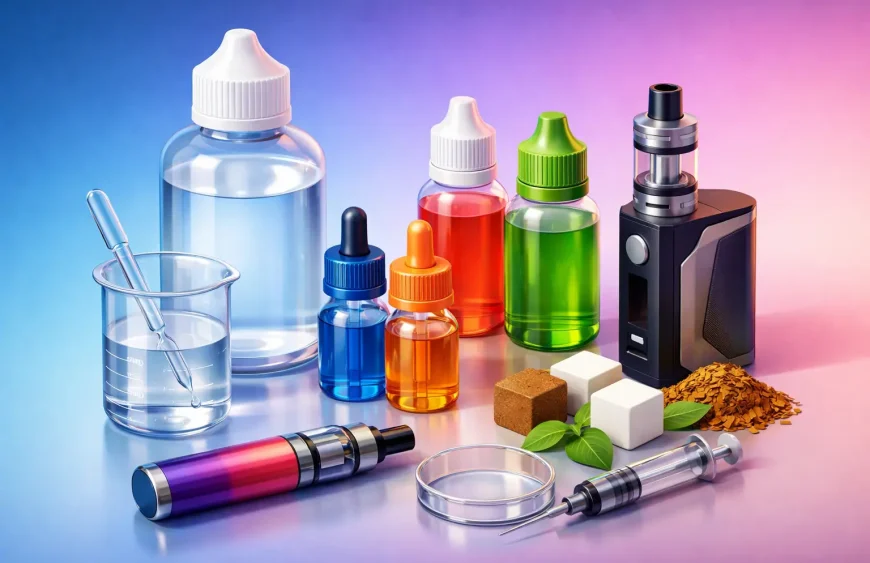
A DIY bottle can taste exactly right and still be wrong for you if the nicotine strength is off. Knowing how to use nicotine base means more than adding a measured amount to flavor concentrate. You need to choose the right nicotine type, calculate the final strength, account for VG/PG, and handle every bottle with care.
Nicotine is an addictive substance and is intended for adults of legal smoking age only. Do not eat, drink, or vape while mixing. Keep nicotine base, finished e-liquid, and empty bottles away from children and pets at all times.
What nicotine base does in DIY e-liquid
Nicotine base is concentrated nicotine diluted in either propylene glycol (PG), vegetable glycerin (VG), or a blend of both. It is the ingredient that sets the nicotine strength of your finished e-liquid. Flavor concentrates provide the taste, while extra VG and PG shape vapor production, throat hit, and how well the liquid works in your device.
The label should tell you three things: nicotine strength in mg/mL, nicotine format, and the VG/PG ratio. Read it every time before mixing. Two bottles may look similar but produce very different results if one is 20 mg/mL in PG and the other is a stronger base or VG blend.
For a first DIY mix, lower-strength nicotine base or pre-measured nicotine shots are usually easier to manage than high-strength concentrates. They reduce the consequences of a measuring error and make your calculations more forgiving.
Choose freebase or nicotine salt first
The nicotine base must suit the kind of vape you want to make. Freebase nicotine has a more noticeable throat hit as strength rises. It is commonly used for lower-strength e-liquids in higher-power devices, where vapor output is larger and each puff delivers more liquid.
Nicotine salts generally feel smoother at comparable strengths. They are often preferred for pod systems and lower-power mouth-to-lung devices, especially by adult users who want a stronger nicotine option without an overly sharp hit.
Do not choose solely by the number on the bottle. Device output matters. A 12 mg/mL liquid that feels comfortable in a compact pod may be far too strong in a high-wattage sub-ohm tank. If you are switching from disposables or prefilled pods, check the nicotine format and strength you normally use, then start conservatively.
How to use nicotine base: calculate the amount
The core calculation is simple:
Nicotine base volume = (target strength × final bottle size) ÷ base strength
Use mg/mL for every strength and mL for every volume. For example, you want to make 60 mL of e-liquid at 3 mg/mL using nicotine base at 18 mg/mL:
(3 × 60) ÷ 18 = 10 mL
You would use 10 mL of the 18 mg/mL nicotine base. The remaining 50 mL is made up of flavor concentrate, plain VG, plain PG, and any other non-nicotine components in your recipe.
Here is another common pod-style example. To make 30 mL at 10 mg/mL from a 20 mg/mL nicotine base:
(10 × 30) ÷ 20 = 15 mL
That leaves 15 mL for flavoring and VG/PG. Before you mix, make sure the flavor percentage fits inside that remaining volume. A recipe requiring 15% flavor needs 4.5 mL of concentrate in a 30 mL bottle, leaving 10.5 mL for additional VG or PG after the nicotine base is added.
A DIY mixing calculator can speed up multi-ingredient recipes, but it does not replace checking your inputs. Enter the nicotine strength, carrier ratio, desired final ratio, flavor percentages, and total bottle size carefully. One wrong field can change the final result.
Build the VG/PG ratio around your device
VG makes e-liquid thicker and usually increases vapor production. PG is thinner, carries flavor well, and adds more throat sensation. Many refillable pods work best with thinner blends, while larger tanks and sub-ohm coils can generally handle higher-VG e-liquid.
Your nicotine base counts toward the final ratio. If it is PG-based, every milliliter raises the PG percentage. This is easy to overlook, especially when making a low-VG pod liquid with several PG-based flavor concentrates.
For example, if you want a 50/50 final mix and use 10 mL of PG nicotine base plus 6 mL of PG-based flavors in a 60 mL bottle, you already have 16 mL of PG. Your added plain PG and VG need to bring the finished bottle to 30 mL PG and 30 mL VG. Treat the base and flavors as ingredients, not as extras outside the ratio.
If your liquid wicks slowly, feels too thick, or gives dry hits, a higher PG ratio may suit the device better. If it leaks easily or feels too thin, more VG may help, provided your coil can handle it. The right balance depends on the pod, coil resistance, wattage, and your preferred draw.
Mix carefully, not casually
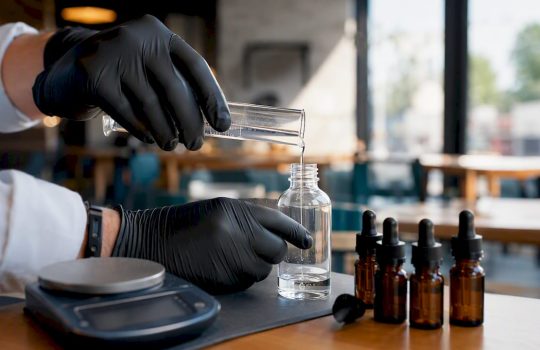
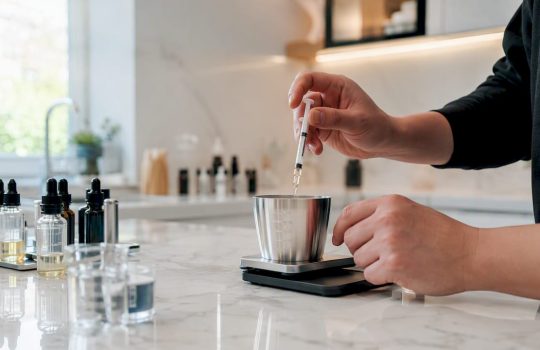
Set up a clean, well-lit work surface away from food, drinks, and distractions. Wear disposable nitrile gloves and use dedicated syringes, graduated cylinders, or a precise scale. A scale that reads to 0.01 grams is especially useful for repeat recipes, but volume tools work well when used carefully.
Have labeled bottles ready before opening the nicotine base. Add each ingredient deliberately, recording the amounts as you go. For a simple batch, add nicotine base, flavor concentrate, then the calculated PG and VG. Cap the bottle tightly and shake until the liquid looks uniform.
If nicotine touches your skin, remove contaminated clothing and wash the area thoroughly with soap and water. If it gets in your eyes, rinse with clean water and seek medical advice. If nicotine is swallowed, contact poison control or emergency services immediately. Do not leave spills, measuring tools, or open bottles on the counter.
Let the liquid settle and test it at low power
Some mixes are ready after a thorough shake, particularly simple fruit or cooling profiles. Creams, desserts, tobaccos, and layered blends often improve after several days or longer because the flavors need time to settle together. Store the bottle closed in a cool, dark place while it steeps, then shake it before testing.
Test new e-liquid in a clean pod or tank at the lower end of the coil’s recommended wattage. This protects the coil and makes it easier to judge the flavor, nicotine feel, and thickness. If the flavor is weak, do not immediately add more nicotine. Nicotine changes throat hit, not flavor intensity.
If the liquid feels too strong, the reliable fix is dilution with nicotine-free VG/PG in the correct ratio, then recalculating the new strength. If it feels too weak, remake the batch or add a precisely calculated amount of nicotine base. Guessing with extra drops is how good recipes become unusable.
Label, store, and know when to stop
Every finished bottle should be labeled with the flavor name, nicotine type, final strength, VG/PG ratio, and mixing date. It saves you from repeating mistakes and makes it clear what is inside if someone else finds the bottle.
Store nicotine base sealed, upright, and out of direct light and heat. A locked cabinet is the right move. Over time, nicotine may darken as it oxidizes. Slight color change can happen, but a major shift in smell, appearance, or performance is a reason not to use it.
DIY mixing gives you control over strength, format, flavor, and cost per bottle. It also asks for accuracy. If calculations, handling concentrated nicotine, or adjusting ratios do not sound like your kind of setup, ready-to-use e-liquids and prefilled options are the smarter convenience choice. For mixers who enjoy the process, start with small batches, write everything down, and let each bottle teach you what to make next.