A 60 mL bottle that is too strong can ruin a great flavor. One that is too weak may leave you reaching for it constantly. Knowing how much nicotine to add comes down to one simple calculation, but choosing the right target strength also depends on your device, vaping style, and the nicotine format you use.
DIY mixing is for adults of legal age only. Nicotine is addictive and can be harmful if swallowed or absorbed through the skin. Work carefully, keep all ingredients secured away from children and pets, and follow the product label and local rules where you live.
Start With Your Target Nicotine Strength
E-liquid strength is measured in milligrams per milliliter, written as mg/mL. A 3 mg/mL e-liquid contains 3 milligrams of nicotine in every milliliter of finished liquid. It does not mean the whole bottle contains only 3 mg of nicotine.
Your target depends on what you currently use. If you are happy with a 3 mg freebase e-liquid in a sub-ohm tank, 3 mg/mL is a sensible DIY target. If you use a low-power pod with 10 mg/mL nic salt, mixing at 3 mg/mL may feel noticeably lighter. Nicotine delivery changes with device power, coil resistance, airflow, puff length, and how often you vape.
For many adult vapers, freebase e-liquid is commonly mixed at 1.5 mg, 3 mg, or 6 mg/mL. Nicotine salts are more often used at higher strengths in low-power pod devices, such as 5 mg, 10 mg, or 20 mg/mL where permitted. Higher strength is not automatically better. It can feel harsh, cause nausea or dizziness, and increase nicotine intake if it does not suit your routine.
If you are moving from disposables or prefilled pods, check the label on your current product before mixing. Match its strength first, then adjust gradually on your next batch if needed. Changing both the nicotine strength and device setup at once makes it difficult to tell what actually works.
The Formula for How Much Nicotine to Add
Use this formula for any final bottle size:
Nicotine base needed in mL = target strength × final volume ÷ nicotine base strength
All strengths in the formula must be in mg/mL. The final volume is the total amount of e-liquid you want to make, not the amount of flavor concentrate or nicotine you have already poured.
For example, you want to make 60 mL of e-liquid at 3 mg/mL using an 18 mg/mL nicotine shot:
3 × 60 ÷ 18 = 10 mL
You need 10 mL of the 18 mg/mL nicotine base. The remaining 50 mL is made up of your flavor concentrate, PG, and VG. If your recipe calls for 6 mL of flavor, you would add 44 mL of plain VG/PG base after adding the nicotine.
Here is another common example. You have a 100 mL bottle and want a finished strength of 6 mg/mL using 20 mg/mL nicotine:
6 × 100 ÷ 20 = 30 mL
Add 30 mL of 20 mg/mL nicotine base. Your remaining ingredients must total 70 mL. Do not add 100 mL of base after the nicotine, or you will end up with a 130 mL batch at a lower strength than intended.
This same math applies to nicotine shots, larger nicotine bases, and longfill-style mixes. The difference is simply the strength printed on the bottle.
Quick nicotine shot example
A typical EU-style nicotine shot may contain 10 mL at 18 mg/mL. That bottle holds 180 mg of nicotine total. Added to 60 mL of nicotine-free liquid, the final volume becomes 70 mL.
180 mg ÷ 70 mL = 2.57 mg/mL
That is why one 18 mg shot does not always create a neat 3 mg result. Bottle size matters. If you want exactly 3 mg/mL, calculate from the final volume instead of assuming one shot fits every mix.
Freebase vs. Nic Salt: Do Not Mix by Feel Alone
Freebase nicotine and nicotine salts can carry the same numerical strength, but they often feel different when vaped. Freebase usually provides more throat hit at higher strengths. Nic salts are generally smoother and can make higher concentrations more comfortable in a compact pod device.
That smoothness is a trade-off. Because a nic salt can feel less harsh, it is easier to use more nicotine than you intended. Start at a conservative strength, especially if you are trying a new pod, coil, or salt formulation.
Use freebase nicotine for recipes and devices designed around freebase use, often including higher-power tanks and rebuildable setups. Use nic salts for low-power pod systems when that is your preferred format. Check the label before mixing – “nicotine base” is not enough information on its own. Confirm whether it is salt or freebase, its mg/mL strength, and its VG/PG ratio.
Keep Your VG/PG Ratio on Track
Nicotine base affects more than strength. It also changes your finished VG/PG ratio. A nicotine shot made with 50/50 VG/PG adds both VG and PG to the recipe. A base that is 100% PG will make the liquid thinner, while a high-VG nicotine base pushes the blend thicker.
This matters most when you are mixing for a specific device. High-VG liquid is popular for sub-ohm tanks because it produces dense vapor, but it may wick poorly in small pods. A 50/50 blend is common for pods because it is thinner and feeds coils more easily.
If you are using a recipe calculator, enter every ingredient accurately: nicotine base strength, nicotine base VG/PG ratio, flavor percentage, target bottle size, and target VG/PG ratio. A calculator prevents basic arithmetic errors, but it only works if the details you enter are correct.
Longfills need extra attention. The bottle may contain flavor concentrate and leave space for shots and base, but its advertised final volume assumes a specific fill amount. Read the product instructions. Adding nicotine without accounting for the longfill’s intended final size can dilute the flavor or leave the bottle overfilled.
Measure Precisely and Handle Nicotine Safely
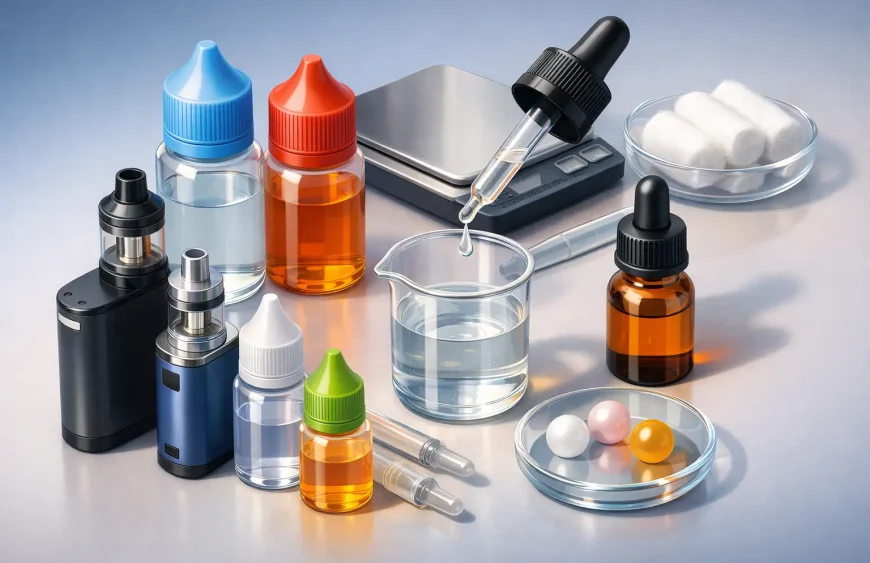
For small DIY batches, a digital scale that measures to 0.01 g is usually the cleanest and most accurate option. Syringes and graduated cylinders can work well too, especially when measuring nicotine shots or small flavor amounts. Do not estimate by eye, and do not use kitchen spoons.
Before you mix, set out a clean bottle, labels, gloves, paper towels, and your measured ingredients. Label the finished e-liquid with the flavor, nicotine strength, date, and VG/PG ratio. This makes reordering your favorite mix easy and prevents confusion later.
Take these precautions every time:
- Wear disposable gloves when handling nicotine concentrates or bases.
- Clean spills immediately with paper towels, then wash the area thoroughly.
- Never leave mixed liquid, nicotine shots, or empty bottles within reach of children or pets.
- Store nicotine tightly sealed in a cool, dark place, clearly labeled and separate from food or drinks.
If nicotine liquid gets on your skin, remove contaminated clothing and wash the area with soap and water. If it is swallowed, or if someone feels unwell after exposure, seek urgent medical advice or contact poison control in your area.
Common Mixing Mistakes That Change the Final Strength
The most common error is calculating nicotine from the empty bottle size instead of the finished volume. Another is forgetting that flavor concentrate and nicotine shots take up space. A third is confusing total milligrams in a bottle with mg/mL strength.
Avoid mixing a large batch before you know you like the result. Make 30 mL or 60 mL first, vape it in your regular device, and assess both flavor and satisfaction over a few days. If it feels too strong, lower the nicotine on the next batch rather than trying to dilute an unlabeled bottle by guesswork.
Also consider your daily use. If you are vaping more often after dropping strength, your total nicotine intake may not fall as much as expected. If you feel nausea, headache, dizziness, or a racing heartbeat, stop vaping and reassess the strength and frequency of use.
The best DIY mix is not the one with the highest number on the label. It is the accurately measured strength that fits your device, keeps the flavor clean, and feels right for your adult nicotine routine. Build your first batch carefully, label it clearly, and let the next bottle be the small adjustment that gets you closer to your ideal setup.