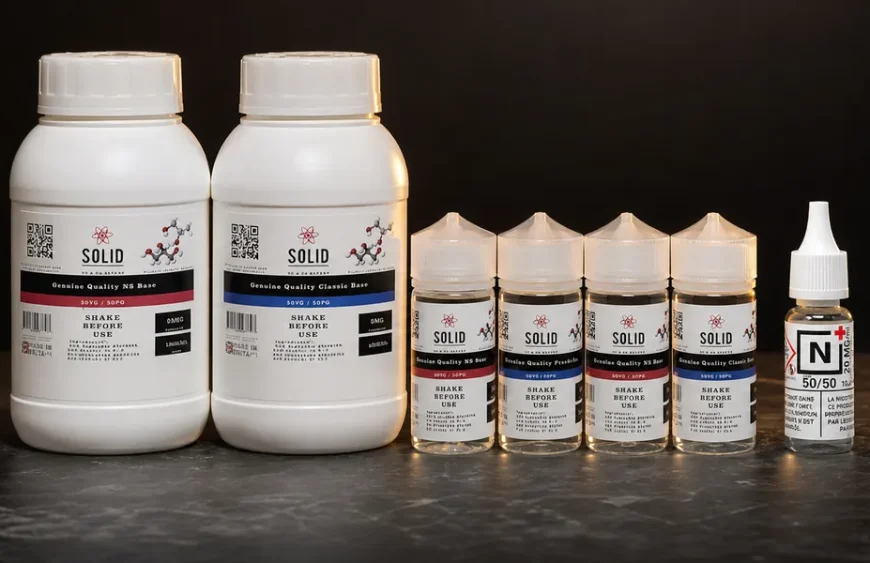
Nicotine for e-liquid must be identified by formulation, concentration, carrier ratio, bottle format, and intended device before it is selected or diluted. A larger number is not automatically better. In fact, the same mg/ml can feel very different when the formulation, coil output, and puff pattern change.
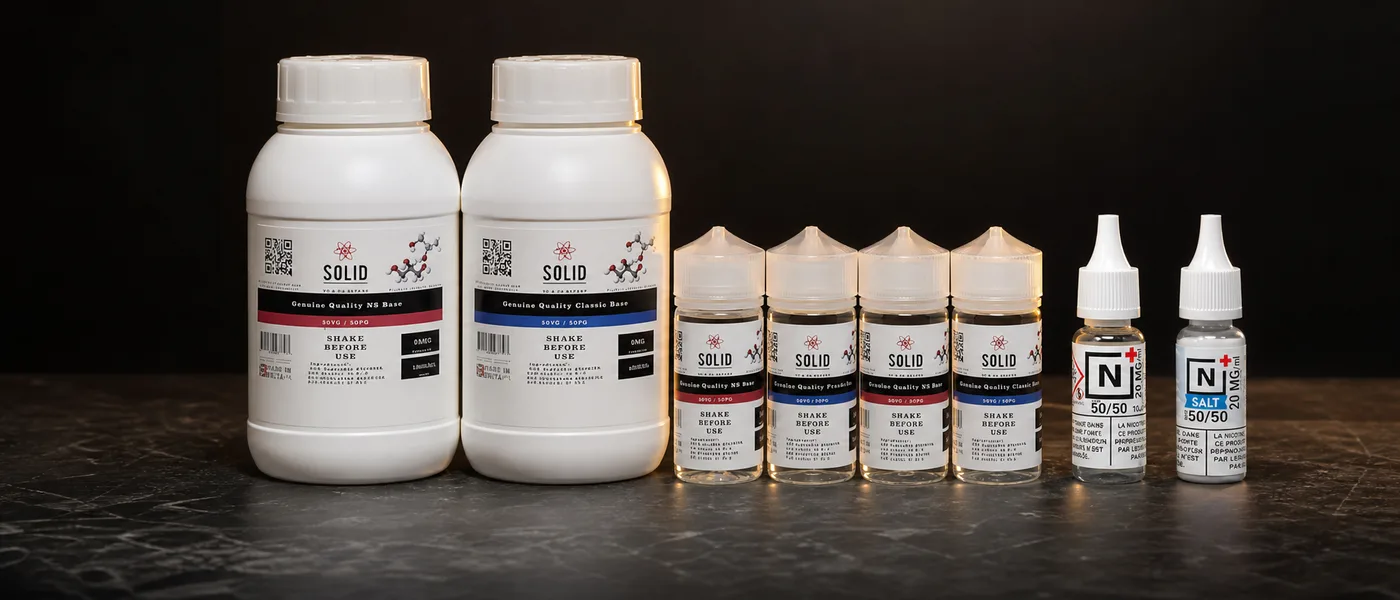
What does nicotine for e-liquid mean?
Nicotine is an optional ingredient in e-liquid. A 0mg liquid contains none, while a nicotine-containing liquid states its concentration in milligrams per millilitre. The nicotine may already be present in a finished flavoured product, included in an unflavoured base, or supplied in a small shot for a calculated dilution.
The phrase does not identify one universal substance or strength. First, freebase and salt describe different formulations. Secondly, mg/ml describes concentration. Thirdly, VG/PG describes the carrier liquid. Finally, bottle volume tells you how much liquid is present, not how concentrated it is.
Freebase nicotine vs nicotine salt
Freebase nicotine is the traditional form used in e-liquid. It is relatively alkaline, so its throat sensation generally becomes more pronounced as concentration rises. Nicotine salt is formulated with an acid, which changes the chemical balance and can produce a smoother sensation at an equivalent label strength.
However, smoother does not mean weaker. A 20mg/ml salt and a 20mg/ml freebase product both contain 20 milligrams of nicotine per millilitre. The device and puffing pattern still affect how much liquid is vaporised and how the user experiences it.
| Feature | Freebase nicotine | Nicotine salt |
|---|---|---|
| Formulation | Traditional freebase form | Nicotine formulated with an acid |
| Typical sensation | Throat feel often becomes firmer as strength rises | Can feel smoother at the same label concentration |
| Common hardware context | Lower strengths across MTL and higher-output systems, depending on the product | Often used in lower-output pods and MTL devices |
| What the name does not tell you | Exact mg/ml, VG/PG, or compatible device | Exact mg/ml, VG/PG, or compatible device |
The detailed nicotine salt vs freebase guide covers formulation and device differences. This page stays focused on recognising formats and reading strength labels correctly.
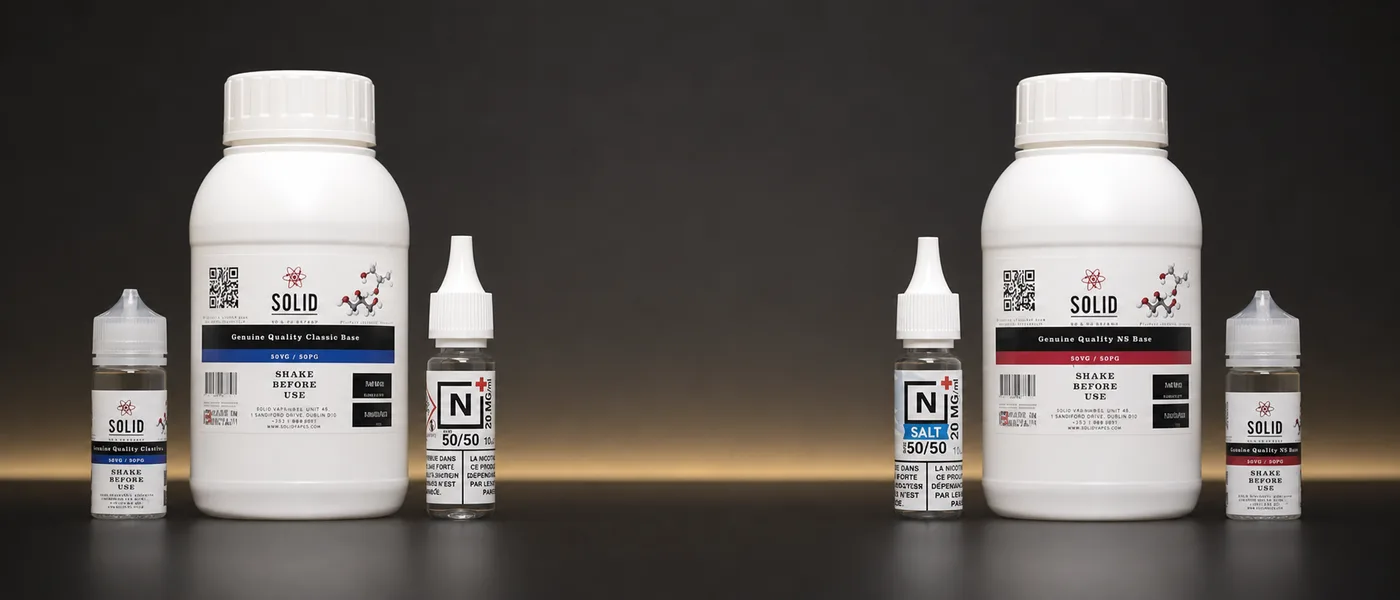
Four nicotine product formats to recognise
Finished nicotine e-liquid
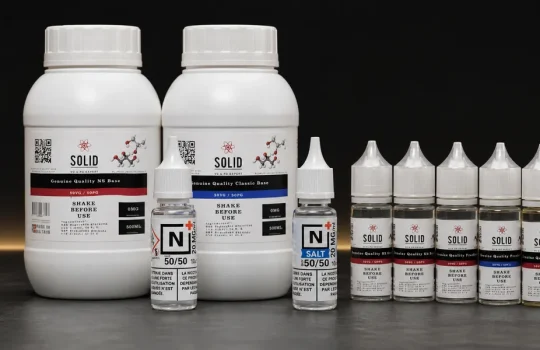
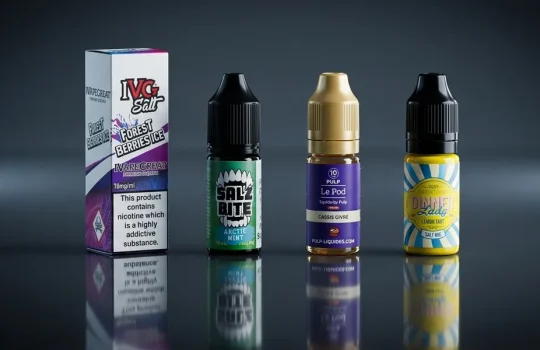
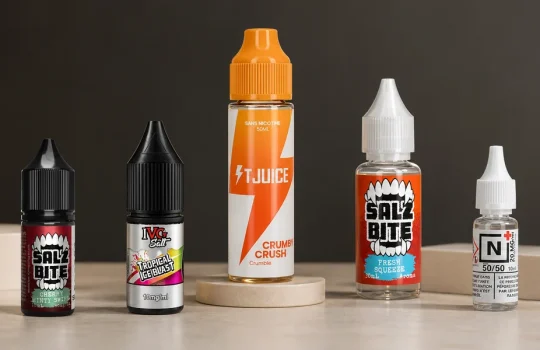
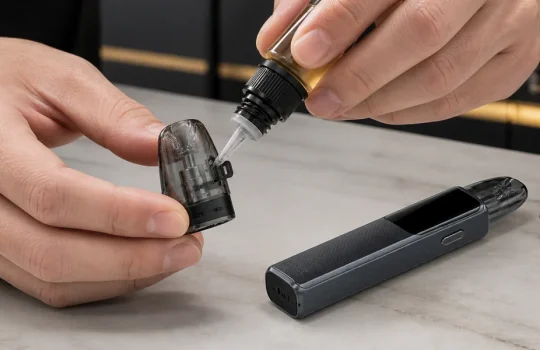
This is already flavoured and intended for a compatible device without adding base or aroma. In the EU, nicotine-containing consumer refill bottles are limited to 10ml and 20mg/ml. Read the ratio and device guidance before filling a cartridge.
Nicotine shot
A shot is a small unflavoured nicotine component intended to be diluted into a larger nicotine-free recipe. Its concentration, volume, formulation, and VG/PG ratio must enter the calculation. A shot should not be treated as a finished flavoured liquid.
Pre-nicotinised base
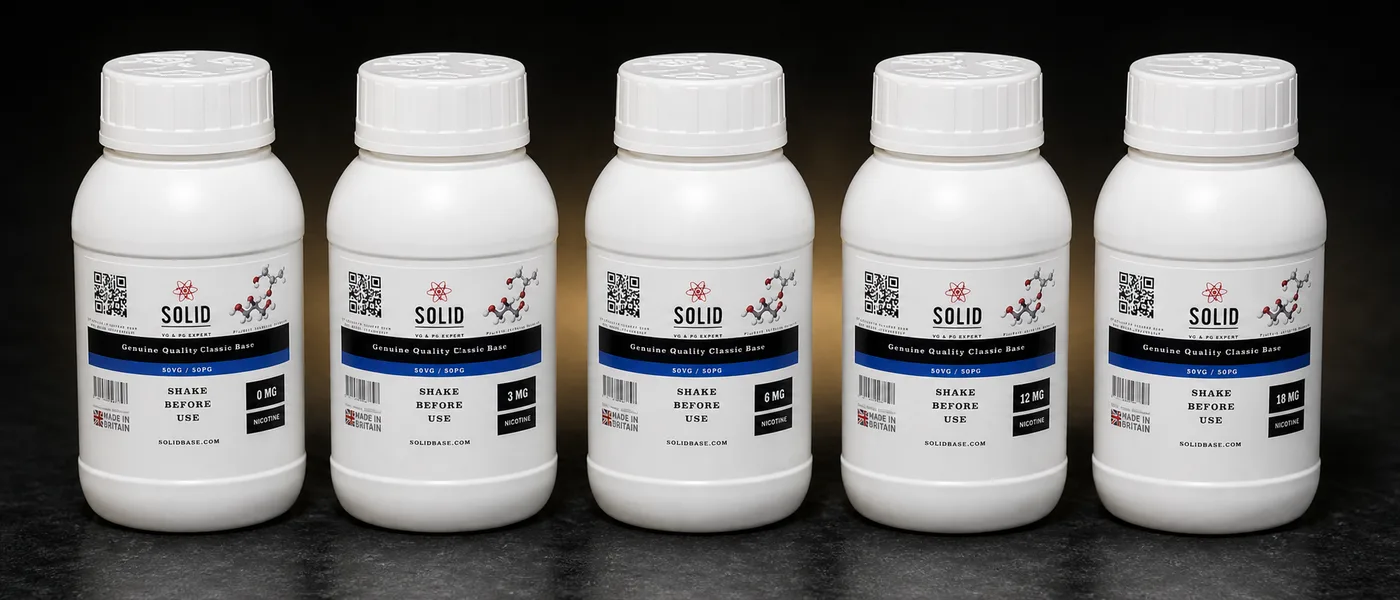
This is an unflavoured VG/PG base that already contains a stated nicotine concentration, such as 3mg/ml or 6mg/ml. It removes one dilution step, but flavour concentrate still changes the final volume and may reduce the final nicotine concentration.
High-concentration or professional base
Some catalogues show strengths above EU consumer refill limits for particular markets or business users. These products are not beginner DIY shortcuts. Availability on a website does not establish that a product is legal or appropriate for a consumer in every country.
How to read mg/ml, percentages, and total nicotine
Milligrams per millilitre expresses concentration. For example, 6mg/ml means each millilitre of liquid contains 6mg nicotine. A percentage can express the same concentration: 1% equals 10mg/ml, so 0.3% equals 3mg/ml, 0.6% equals 6mg/ml, and 1.8% equals 18mg/ml.
Total nicotine is different. Multiply the concentration by bottle volume. Therefore, a 10ml bottle at 20mg/ml contains 200mg nicotine in the whole bottle. That total does not mean the user receives 200mg in one puff or even in one session. Device output, liquid consumption, puff duration, and user behaviour all affect delivery.
| Label strength | Equivalent percentage | Nicotine in each ml | Nicotine in 10ml total |
|---|---|---|---|
| 0mg/ml | 0% | 0mg | 0mg |
| 3mg/ml | 0.3% | 3mg | 30mg |
| 6mg/ml | 0.6% | 6mg | 60mg |
| 9mg/ml | 0.9% | 9mg | 90mg |
| 12mg/ml | 1.2% | 12mg | 120mg |
| 18mg/ml | 1.8% | 18mg | 180mg |
| 20mg/ml | 2% | 20mg | 200mg |
Always include the unit when writing a recipe. A note that says only “6” is ambiguous. Instead, write “6mg/ml final nicotine” and record the source bottle as a separate concentration and volume.
Strength must be matched to the device
A strength number cannot be judged without hardware context. A low-output pod vaporises much less liquid per puff than a high-output sub-ohm setup. Consequently, a concentration used in a small pod can be unsuitable in a device that produces far more aerosol.
Coil resistance is only one clue. Power, airflow, puff duration, liquid consumption, and cartridge design all matter. Therefore, follow the device maker’s guidance and never transfer a high-strength liquid into more powerful hardware merely because the bottle physically fits.
Existing nicotine use also matters, but a blog cannot determine an individual’s correct dose. The nicotine salt strength guide explains salt-specific choices, while qualified stop-smoking or healthcare support can help an adult who is replacing smoking and remains unsure.
EU refill limits and label checks
Under Article 20 of the EU Tobacco Products Directive, nicotine-containing liquid placed on the consumer market in a dedicated refill container must not exceed 20mg/ml, and the refill container must not exceed 10ml. The rules also require child- and tamper-resistant packaging, protection against breakage and leakage, and a mechanism for leak-free refilling.
Before purchase, check the exact market and customer eligibility as well as the bottle. A compliant consumer label should make the concentration, ingredients, batch information, warnings, and instructions clear. In addition, never decant nicotine liquid into an unlabelled container or a food or drink bottle.
Zero-nicotine VG, PG, and 0mg base are different because they contain no nicotine. Nevertheless, they should still be stored cleanly and securely and used only for their intended mixing purpose.
Current nicotine base examples to compare
The cards below show label formats across classic bases and a 20mg shot. They are examples for comparison, not a recommendation that every adult should use the same concentration. All six listings were in stock when checked on 15 August 2026. Prices and variants can change.
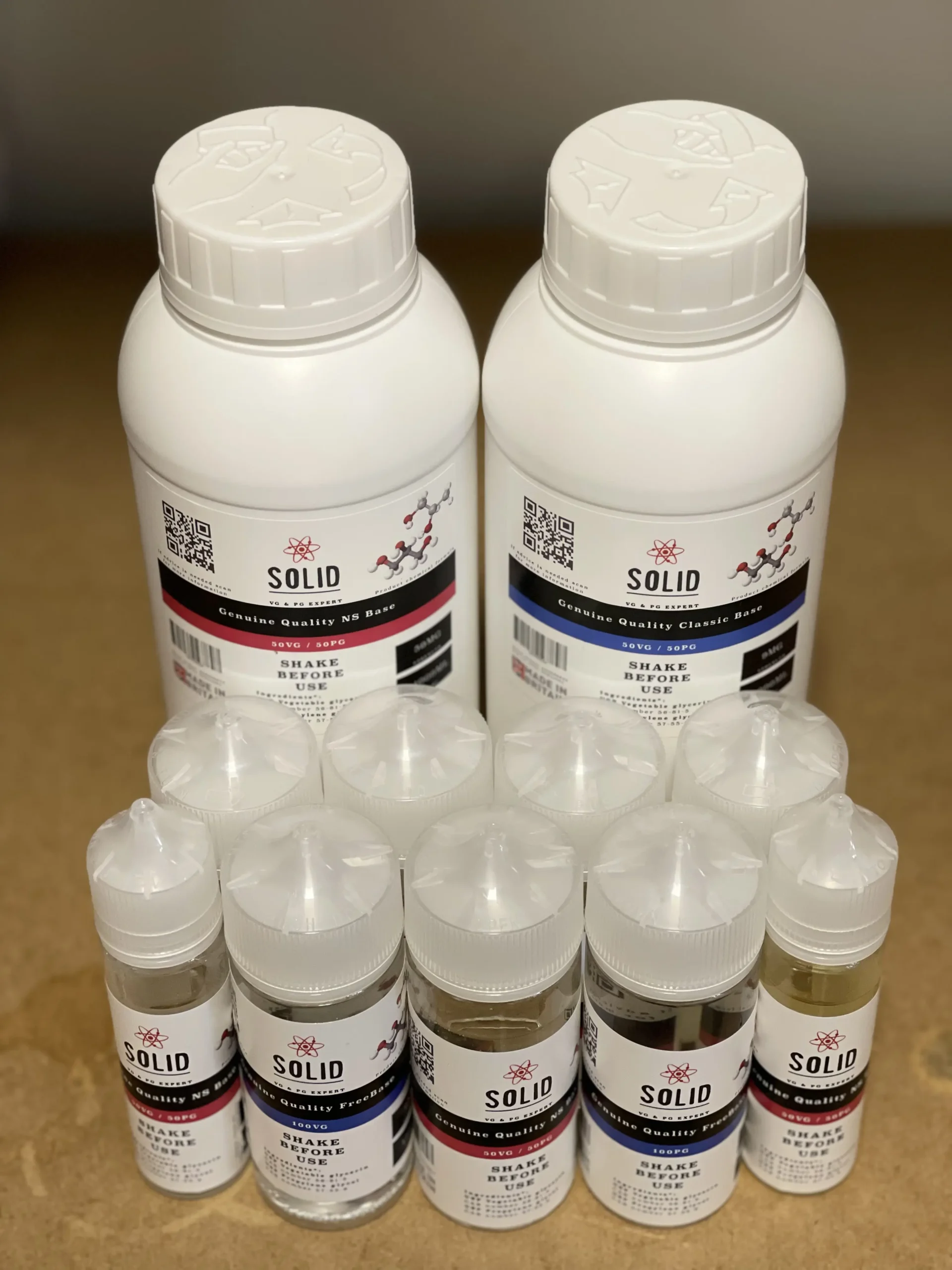
0.3% Base
A pre-nicotinised classic base where 0.3% equals 3mg/ml.
0.6% Base
A pre-nicotinised classic base where 0.6% equals 6mg/ml.
0.9% Base
A pre-nicotinised classic base where 0.9% equals 9mg/ml.
1.2% Base
A pre-nicotinised classic base where 1.2% equals 12mg/ml.
1.8% Base
A pre-nicotinised classic base where 1.8% equals 18mg/ml.
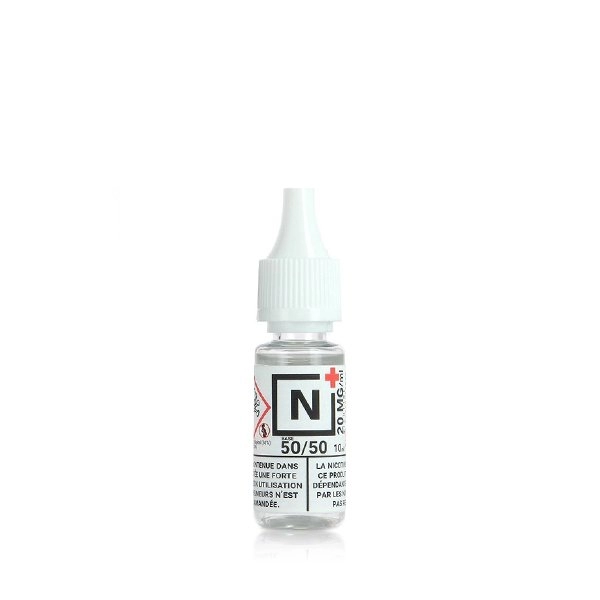
Classic Nicotine Shot 20mg N+
A measured nicotine component for a verified dilution calculation.
Compare all current formats and customer-specific availability in the Polish bases category. Confirm the selected variation because a product family may contain several bottle sizes or strengths.
How dilution changes nicotine strength
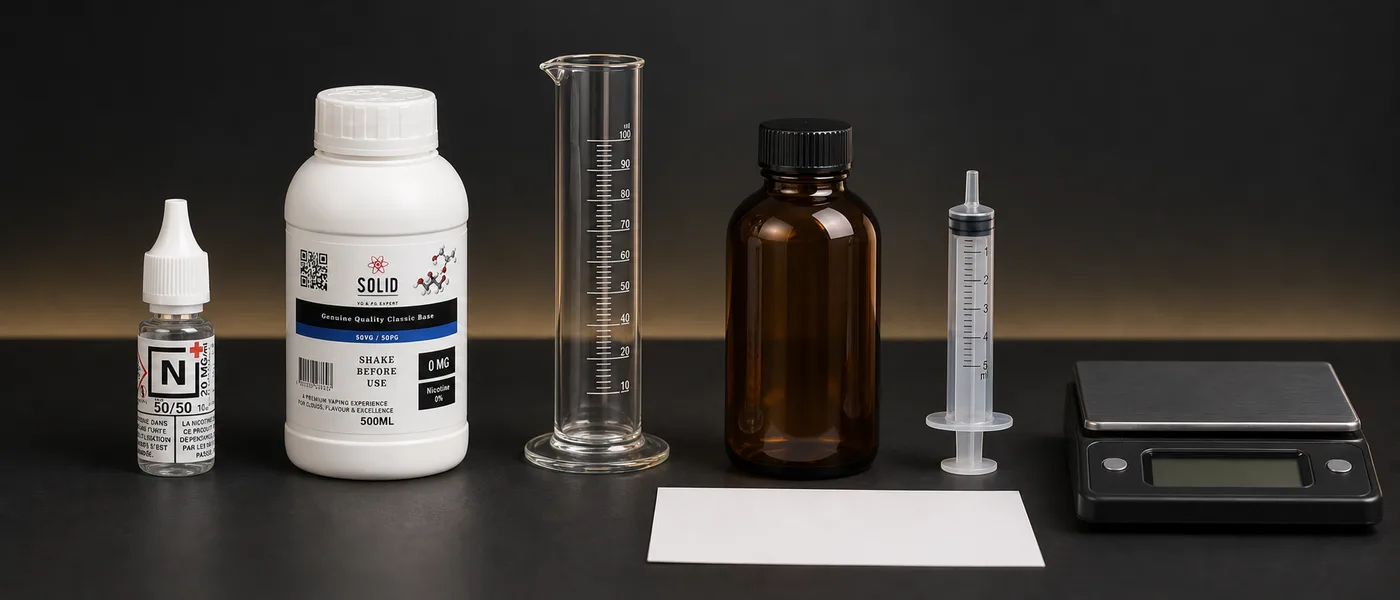
Dilution preserves the total amount of nicotine while spreading it through a larger final volume. The source volume required is calculated with the target concentration, final bottle volume, and source concentration:
(target mg/ml × final ml) ÷ source mg/mlFor example, a 60ml final bottle at 3mg/ml contains 180mg nicotine in total. Using a 20mg/ml source requires 9ml of that source. The remaining 51ml is the combined nicotine-free base and flavour concentrate. However, the source and concentrate carriers must also be included when calculating the final VG/PG ratio.
Use the nicotine strength calculator guide to check arithmetic, then follow the DIY e-liquid base workflow for measurement, handling, and labelling.
The practical verdict
Choosing nicotine for e-liquid starts with identifying what the bottle is. Freebase versus salt describes formulation. Mg/ml or percentage describes concentration. VG/PG describes the carrier, and bottle volume determines the total liquid available.
Next, match the finished strength and ratio to compatible hardware and the adult user’s existing nicotine needs. Finally, calculate any dilution, label the result, and store it securely. If a product’s market status, strength, or format is unclear, do not use it until the supplier or qualified guidance resolves the uncertainty.
Frequently asked questions
What types of nicotine are used in e-liquid?
The two main formulations are freebase nicotine and nicotine salt. Either may appear in a finished e-liquid, shot, or base. The complete label must also state concentration, carrier ratio, volume, and intended use.
Is 1% nicotine the same as 10mg/ml?
Yes. One percent equals 10mg/ml. Therefore, 0.3% equals 3mg/ml, 0.6% equals 6mg/ml, 1.2% equals 12mg/ml, and 1.8% equals 18mg/ml.
Is nicotine salt weaker than freebase nicotine?
Not when the printed concentration is the same. A 20mg/ml salt and a 20mg/ml freebase liquid both contain 20mg nicotine per millilitre. Their formulation and sensory profile differ, so read strength separately.
What is a nicotine shot for e-liquid?
A nicotine shot is a small unflavoured nicotine liquid intended for a calculated dilution into a larger nicotine-free recipe. Its mg/ml, bottle volume, formulation, and VG/PG ratio must all be included.
What is the EU nicotine limit for refill e-liquid?
EU Tobacco Products Directive Article 20 limits nicotine-containing consumer refill liquid to 20mg/ml and dedicated refill containers to 10ml. Market and customer restrictions still need to be checked for each product.
Can I add nicotine without using a calculator?
No. Calculate from the target mg/ml, final volume, and source mg/ml before measuring. Estimating by drops, bottle fraction, or memory can produce the wrong strength and an inaccurate carrier ratio.
Continue with the e-liquid base cluster
For adults who already use nicotine only. Nicotine is addictive and nicotine-containing liquid requires careful handling. Keep every bottle secured away from children and pets. Follow the product label and local law, and seek poison-centre or medical advice after ingestion, significant skin exposure, or concerning symptoms. This guide explains labels and calculations rather than providing individual medical advice.