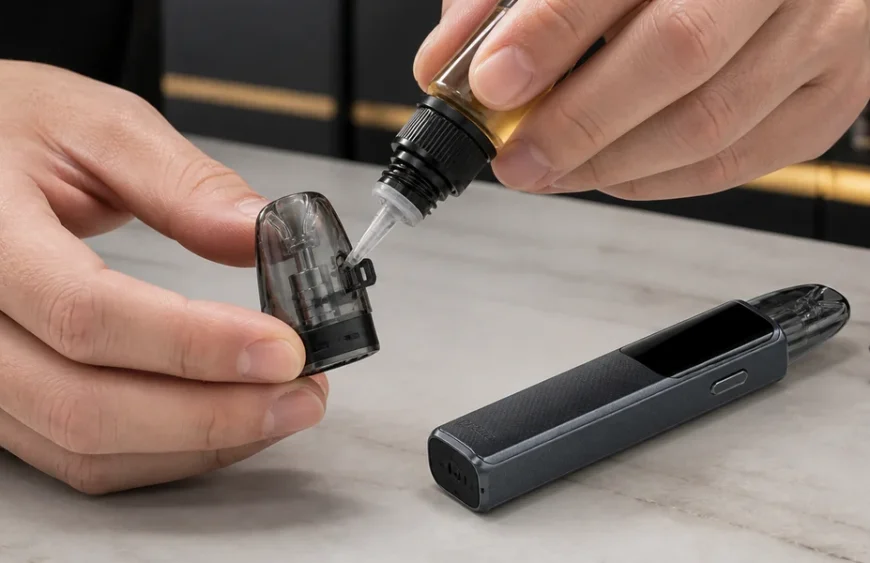
E-cigarettes are electronic devices that heat e-liquid and create an aerosol for inhalation. A compact closed pod, refillable pod, vape pen, and regulated mod can look very different, yet each relies on the same core system: a battery supplies power, a coil provides heat, a wick feeds liquid to the coil, and an airflow channel carries the resulting aerosol to the mouthpiece.
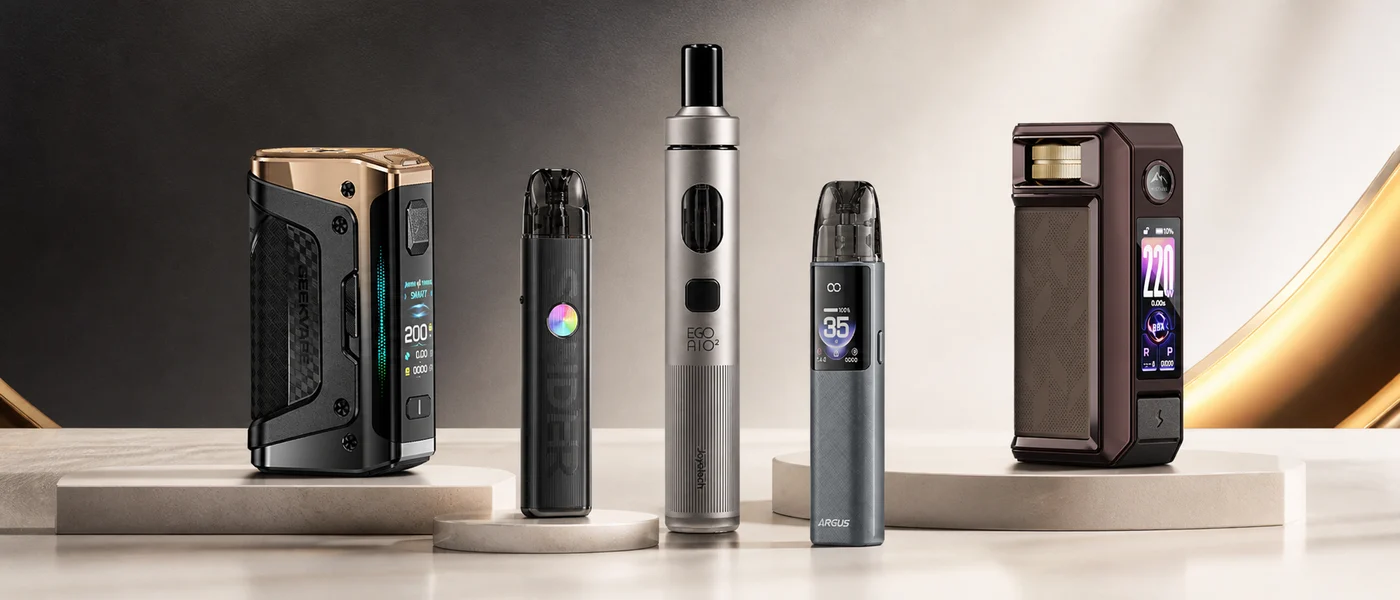
How does an e-cigarette work?
An e-cigarette turns stored electrical energy into controlled heat. It does not burn tobacco. Instead, it heats a small amount of e-liquid held in absorbent wick material. The result is an aerosol, not cigarette smoke and not simply water vapor.
- The device activates. A draw-activated model detects airflow through a pressure sensor. A button-activated model starts when the user presses its fire button.
- The battery powers the coil. Current passes through the resistance wire or mesh inside the atomizer head.
- The coil becomes warm. A regulated device limits and manages the power sent to that heating element.
- The wick supplies e-liquid. Cotton or another absorbent material draws liquid from the pod or tank toward the heated surface.
- Air carries the aerosol out. Incoming air passes the coil and travels through a chimney or internal channel to the mouthpiece.
This sequence happens rapidly, but liquid supply and airflow must keep pace with the heat. Too little liquid at the wick can cause a dry or burnt taste. Too much liquid around the coil can produce gurgling or leakage. A blocked air inlet can also change activation and performance.
The main parts of an e-cigarette
Battery and power electronics
The battery is usually built into the device, although some larger regulated mods use a removable cell. A control board manages activation and may monitor voltage, resistance, temperature, charging, and cut-off time. Small pod devices often choose an appropriate output automatically, while advanced devices may let the user adjust wattage.
Pod, cartridge, or tank
The reservoir holds e-liquid. A pod normally clips or slides into a compact device body. A cartridge is often a sealed or prefilled liquid component. A tank is usually a larger refillable assembly attached to a vape pen or mod. These terms sometimes overlap in everyday product descriptions, so the useful question is whether the component is sealed, refillable, and fitted with an integrated or replaceable coil.
Coil and wick
The coil is the heating element. It may use round wire or a perforated mesh structure, and it sits beside absorbent wick material. Some pods contain a permanently installed coil, which means the whole pod is replaced when performance declines. Other pods and tanks accept a separate coil head. Resistance, recommended power, liquid thickness, and airflow all need to work together. The complete vape coil guide explains those relationships in more detail.
Airflow path and mouthpiece
Air enters through one or more small inlets, passes the heating area, and exits through the mouthpiece. A narrow path usually creates a tighter draw, while a wider path allows more air. Some e-cigarettes have an airflow slider or ring. Others have a fixed inlet designed around one pod and coil range.
Charging connection and contacts
Rechargeable devices commonly use a USB-C port, although the supplied instructions determine the correct charging method. Metal contacts connect the device body to a removable pod or tank. Condensation or liquid on those contacts can interrupt activation, so they should be kept clean and dry.
Types of e-cigarettes compared
| Type | Liquid and coil system | Controls | Routine care |
|---|---|---|---|
| Sealed disposable-style device | Fixed reservoir and coil | Usually draw-activated | Keep clean, then use an appropriate electrical-waste route when finished |
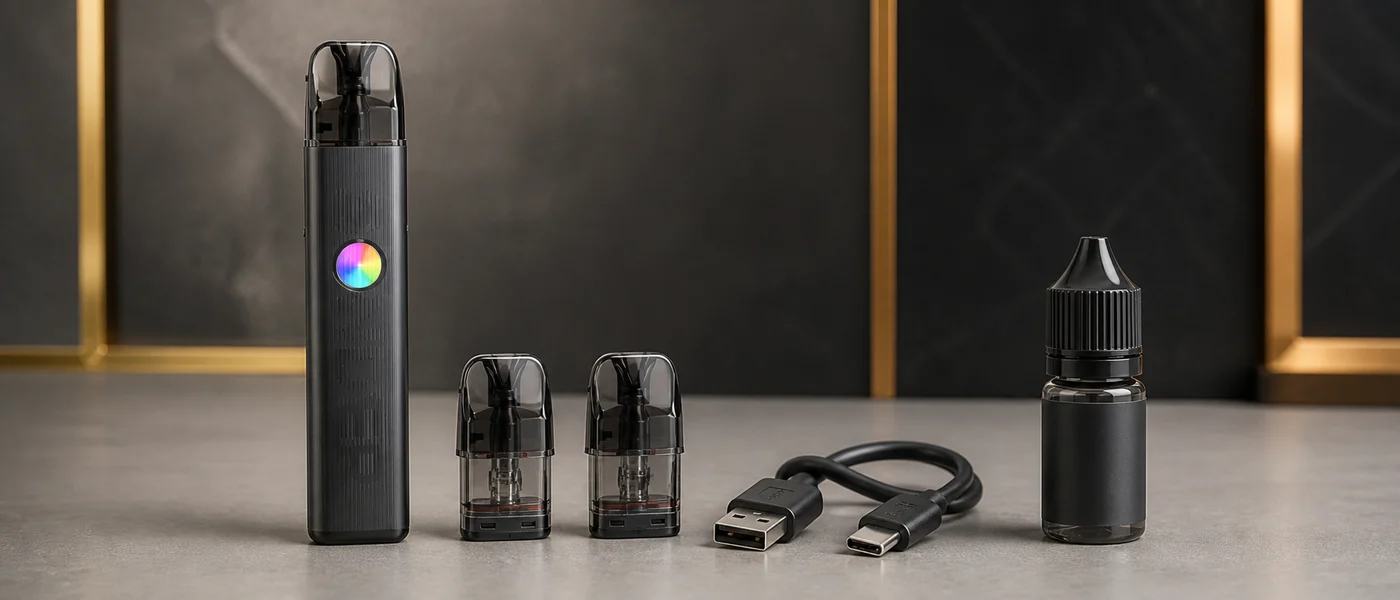
| Closed pod | Replaceable prefilled pod | Usually automatic or very simple | Recharge body, replace pod, wipe contacts |
| Refillable pod | Refillable pod with integrated or replaceable coil | Automatic, button-controlled, or both | Refill, clean, and replace pod or coil |
| Vape pen | Refillable pod or cylindrical tank | Fixed or limited adjustment | Refill, charge, and maintain coil and seals |
| Regulated mod | Refillable tank with replaceable coil | Adjustable power and display | Set compatible power, maintain tank, and manage battery correctly |
Sealed and closed-pod systems
A sealed device combines the liquid, coil, and battery in one closed body. A closed-pod kit separates the rechargeable battery section from a replaceable prefilled pod. Both formats minimize filling and coil handling. Their main limitations are restricted liquid choice, fewer adjustments, and more components that must be replaced as complete units.
Refillable pod systems
A refillable pod offers more choice in e-liquid and may support several compatible coil resistances. Compact models usually operate at lower power than large tank systems. They are convenient when the pod, coil, liquid ratio, and output are correctly matched, but they require careful filling and periodic cleaning.
Vape pens and regulated mods
A vape pen places the battery and tank in a slim cylindrical or pen-like format. A regulated mod uses a larger body with a screen or adjustment controls and supports a wider range of tanks and power settings. Greater adjustability is useful only when the user understands the coil’s specified range and the device’s battery requirements. For a direct format comparison, see pod vape vs mod.
Current device examples from VSHUB24
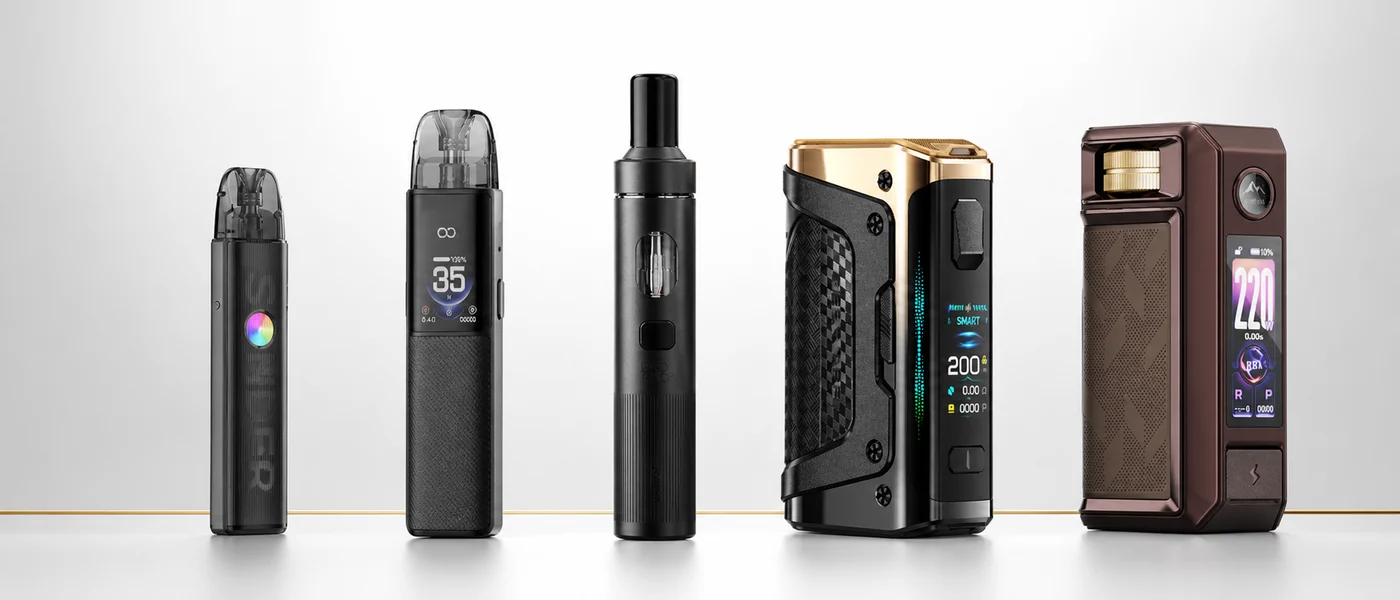
The current VSHUB24 hardware range shows how those categories translate into real products. These examples are linked for specifications and compatibility details, not as a universal ranking.
| Device | Format | What it demonstrates |
|---|---|---|
| GeekVape Sonder Q3 | Refillable pod kit | Autodraw operation, adjustable airflow, up to 30W, and compatibility with GeekVape Q and Q V2 cartridges |
| Voopoo Argus G4 | Refillable pod kit | A built-in 1650mAh battery, up to 35W, and replaceable Argus Multi-Ohm cartridges |
| Joyetech eGo AIO 2 SP | All-in-one vape pen | A 1700mAh built-in battery, integrated refillable tank, adjustable airflow, and replaceable Joyetech BF coil |
| GeekVape Aegis Legend 5 | Regulated box mod | Dual-18650 power, output up to 200W, several operating modes, and compatibility with a separately supplied GeekVape Z atomizer |
| Voopoo Drag 6 | Regulated box mod | Adjustable output up to 220W and compatibility with the UFORCE-X II atomizer and PnP X coil platform |
How power, coil resistance, and airflow work together
Power determines how much energy reaches the coil over time. Coil resistance is one part of that electrical relationship, but it does not describe the entire vaping style on its own. Coil size, mesh area, wick design, airflow, and the manufacturer’s specified power range also matter.
Lower-power pod setup
A smaller coil and tighter airflow generally use less e-liquid per draw and suit compact devices. Follow the supported coil and liquid guidance.
Higher-power tank setup
A larger coil and more open airflow can process more liquid and air. It needs a device, battery, tank, and liquid designed for that load.
Adjustable airflow
Closing airflow tightens the draw; opening it cools the coil with more incoming air. Extreme settings can upset the intended balance.
When a coil has a printed or documented wattage range, start near its lower end after the wick is fully saturated. Increase only within that range and only if the liquid supply keeps up. Never assume that two coils with the same resistance need the same setting.
Which e-liquid works with each device?
Compatibility depends strongly on viscosity. Propylene glycol, known as PG, is thinner. Vegetable glycerine, known as VG, is thicker. Small pods with narrow liquid channels often work best with balanced or thinner blends such as 50/50, while larger, more open tank coils can usually handle higher-VG liquid. The device or coil instructions should take priority over a general rule.
- Closed pod: use only the matching sealed pod made for that device.
- Refillable compact pod: choose a ratio and nicotine format supported by its coil and intended power range.
- Vape pen or tank: match the liquid thickness to the coil’s inlet size and recommended use.
- Regulated mod: set the power for the installed coil rather than for the tank’s appearance or the previous coil.
Nicotine strength is separate from PG/VG ratio. A liquid can be thick or thin at different nicotine levels, and the same labeled strength may feel different when the device produces more aerosol per draw. The guide to e-liquid types, VG/PG, nicotine, and flavors covers these choices without treating the liquid and hardware as separate systems.
Refilling and maintaining an e-cigarette
- Remove the pod or open the tank exactly as shown in the device instructions.
- Locate the actual fill port. Do not pour liquid into the central airflow chimney.
- Fill slowly, leave some air space, and close the plug or cap completely.
- Wipe the exterior and device contacts before reinstalling the pod.
- Allow a new coil or dry wick enough time to absorb liquid before activation.
- Replace the pod or coil when flavor remains burnt, output falls sharply, or the wick no longer feeds consistently.
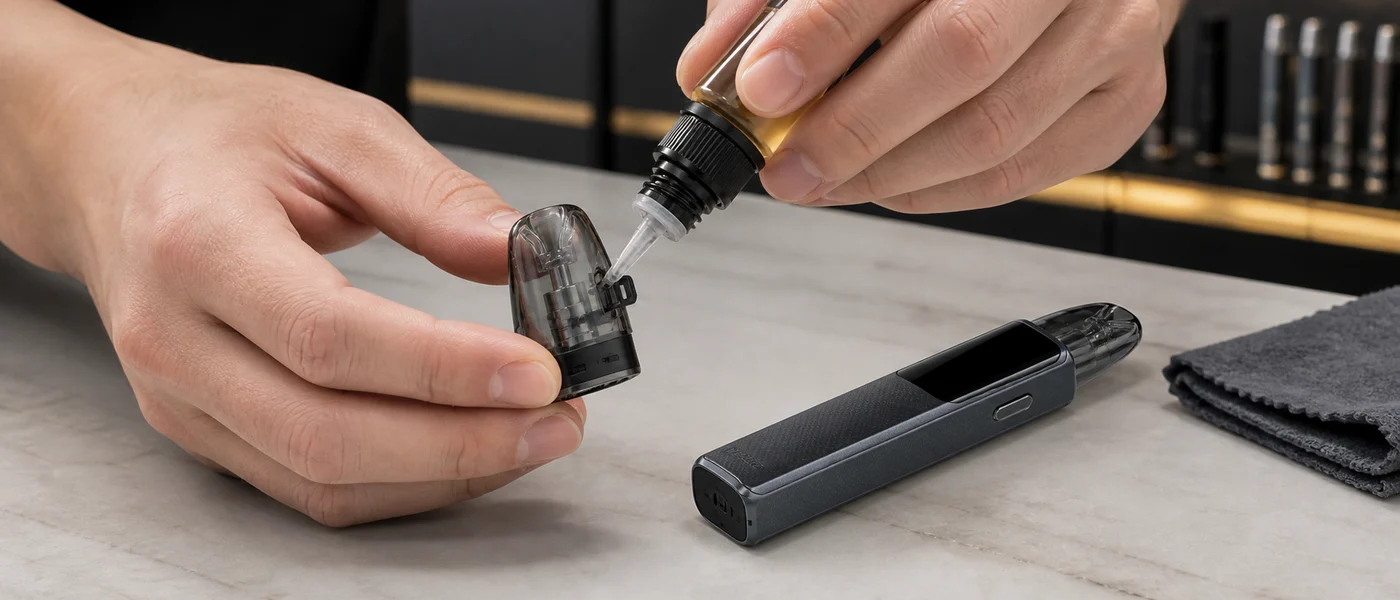
Small droplets under a pod are often condensation, but a growing pool of liquid indicates a leaking seal, overfilling, coil problem, or damaged component. Clean the area and inspect the pod rather than continuing to use a wet device. For a new replaceable coil, follow the step-by-step coil priming guide. For charging and removable-cell handling, use the vape battery safety guide.
Common e-cigarette problems
Burnt or dry taste
The wick may be dry, the reservoir may be empty, the power may be too high, or the coil may have reached the end of its useful life. Stop using it, check the liquid level and setting, and replace a damaged coil. Adding liquid cannot restore scorched wick material.
Gurgling, spitting, or leaking
Excess liquid may have entered the coil or central airflow channel. Overfilling, loose seals, sudden temperature changes, an incorrectly installed coil, or a cracked pod can all contribute. Clean the parts, confirm assembly, and replace damaged seals or pods.
No aerosol or intermittent activation
Check the charge level, power state, pod seating, and dry metal contacts. A draw-activated device also needs an unobstructed air inlet. If the device reports a coil error or becomes unusually hot, stop and follow its troubleshooting instructions instead of forcing activation.
Weak flavor or reduced output
A low battery, aging coil, unsuitable liquid viscosity, blocked airflow, or conservative power setting can reduce output. Change one variable at a time and stay within the supported configuration. This makes the cause easier to identify.
How to compare e-cigarette systems
There is no single format that suits every adult user. Compare the complete ownership routine, not only the device’s size or appearance:
- Do you want sealed pods or the ability to refill?
- Is automatic output enough, or do you need adjustable power and airflow?
- Can the pod, coil, and other wear parts be obtained in the exact compatible version?
- Which liquid ratios and coil ranges does the system support?
- How often will contacts, fill ports, seals, and the tank need attention?
- Does the charging method and battery arrangement fit your routine?
Explore VSHUB24 categories
Frequently asked questions
What is an e-cigarette?
An e-cigarette is an electronic device that uses battery power to heat e-liquid and create an aerosol for inhalation. Its core parts are a battery, reservoir, coil, wick, airflow path, and mouthpiece.
How does an e-cigarette work?
The battery sends controlled power to a resistance coil. E-liquid reaches the coil through a wick, heat creates an aerosol, and incoming air carries that aerosol through the mouthpiece.
What parts are inside an e-cigarette?
Most e-cigarettes contain a battery, control electronics or an activation sensor, a pod or tank, a coil, absorbent wick material, an airflow channel, and a mouthpiece. Some parts are sealed while others are replaceable.
What is the difference between a closed pod and a refillable pod?
A closed pod arrives prefilled and is replaced as a complete liquid component. A refillable pod has a fill port and may contain either an integrated coil or a separately replaceable coil.
How often should an e-cigarette coil be replaced?
There is no fixed schedule. Replace the coil or integrated-coil pod when a persistent burnt taste, major flavor loss, reduced output, or feeding problems remain after checking the liquid level and settings.
What e-liquid works with an e-cigarette?
Use the liquid format and PG/VG range supported by the specific pod, tank, and coil. Compact pods often suit balanced or thinner liquid, while larger open coils may support higher-VG blends. Always follow the device guidance.
Related guides
For adults only (18+). This article provides general product education, not medical advice. Vaping is not risk-free, and nicotine is addictive. Keep devices, e-liquids, pods, coils, and batteries away from children and pets. Follow the instructions supplied with each product.