Vaping means using an electronic device to heat e-liquid and inhale the aerosol it produces. A vape does not burn tobacco, so it does not create cigarette smoke. It normally contains a battery, a liquid reservoir, and a heating coil. Some e-liquids contain nicotine and others do not. The word “vapor” is common in everyday speech, but aerosol is the more accurate term because the output is a suspension of fine liquid droplets and other substances, not simply water vapor.
How does vaping work?
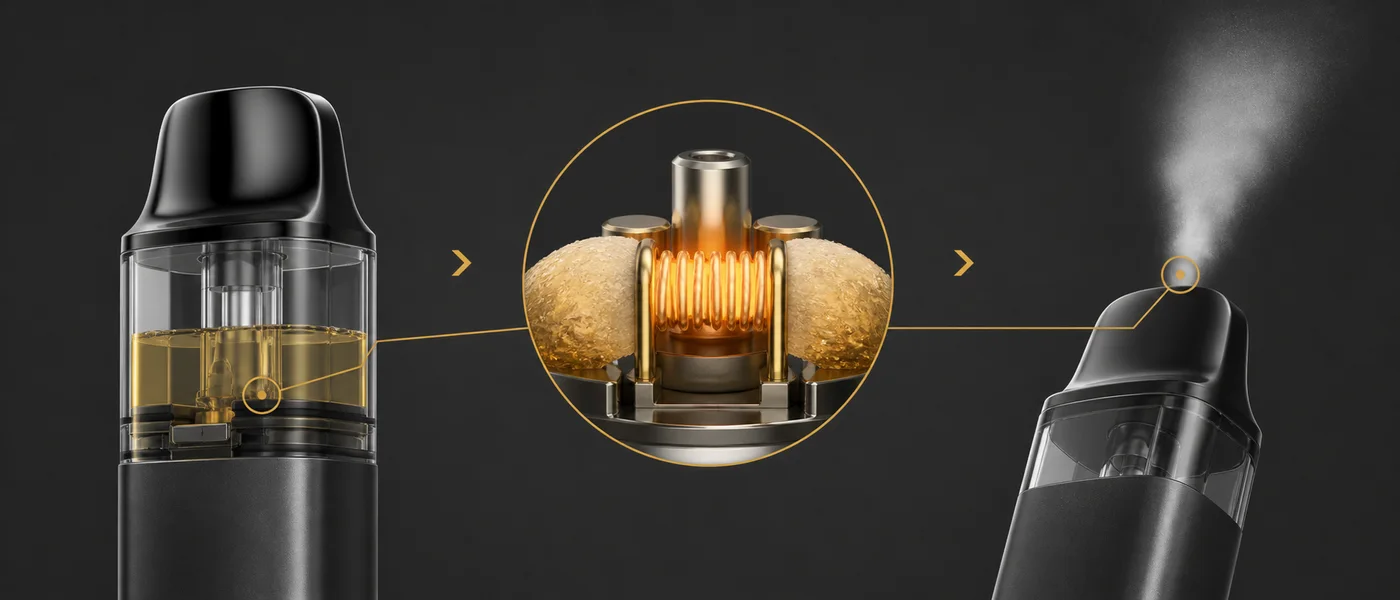
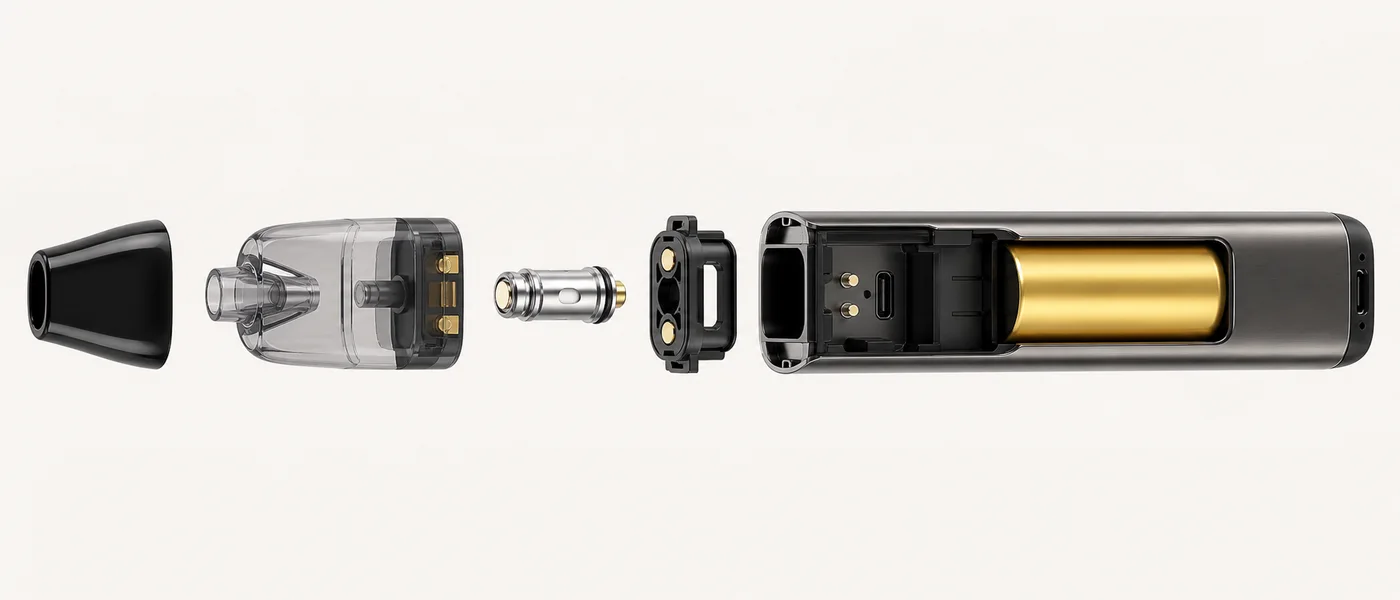
Every common e-cigarette follows the same basic process, even when the device looks different. Power from the battery reaches a resistance coil. E-liquid moves from the reservoir into absorbent material around that coil. When the device activates, the coil becomes hot enough to aerosolize the liquid. The user draws the aerosol through an airflow channel and mouthpiece.
- E-liquid reaches the wick. Cotton or another porous material carries liquid toward the coil.
- The battery supplies power. A draw sensor or button activates the device.
- The coil heats. Electrical resistance converts power into heat.
- An aerosol forms. The heated liquid becomes fine airborne droplets.
- Airflow carries the aerosol. The user inhales it through the mouthpiece.
There is no tobacco combustion in this process. That distinction matters when comparing vaping with smoking, but it does not make the aerosol harmless. Its contents depend on the liquid, hardware, temperature, condition of the coil, and how the device is used.
The main parts of a vape
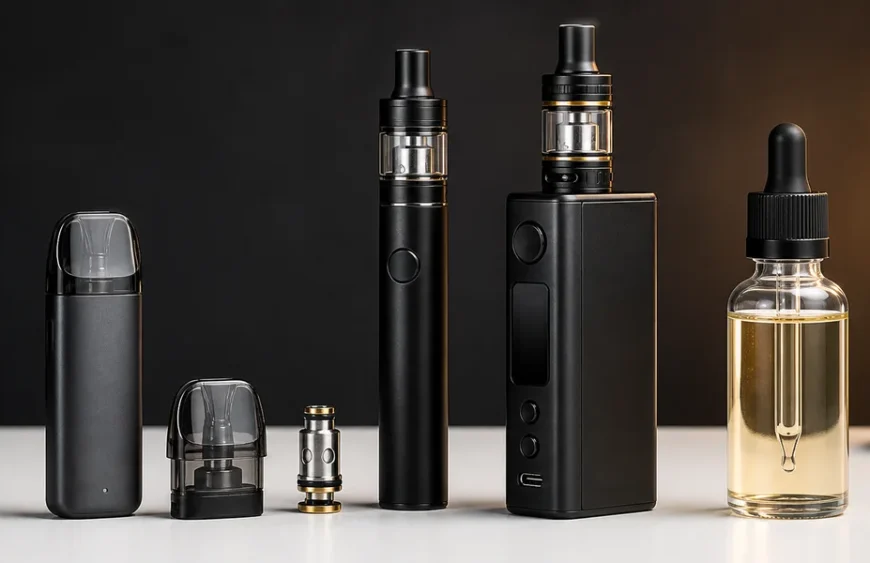
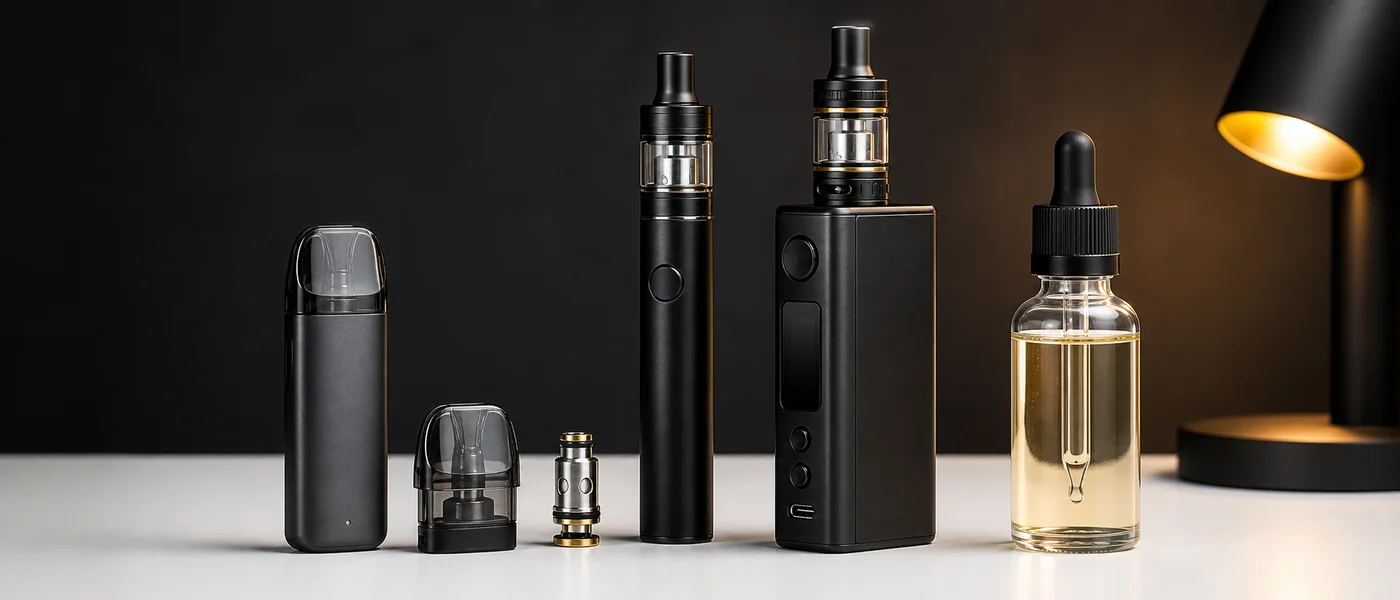
Knowing the parts makes device instructions easier to understand. A compact pod may combine several components into one cartridge, while a larger mod keeps them separate.
| Part | What it does | What beginners should know |
|---|---|---|
| Battery | Stores the electrical energy used by the coil | Use the specified charger and stop using damaged cells or devices |
| Chipset or sensor | Controls activation and safety functions | Some devices use a button; others activate when the user draws |
| Pod or tank | Holds e-liquid | It may be sealed, prefilled, refillable, or fitted with a replaceable coil |
| Coil | Provides the heated resistance element | Coils are consumable and should be replaced when performance deteriorates |
| Wick | Moves e-liquid toward the coil | A dry wick can create an unpleasant dry hit and damage the coil |
| Airflow and mouthpiece | Guide air and aerosol | Blocked airflow, condensation, or incorrect assembly can affect operation |
Vape, e-cigarette, pod, and disposable: what do the terms mean?
Vape is the broad everyday term. E-cigarette is the legal and technical category used for devices that create an aerosol from a liquid. A pod vape uses a removable cartridge called a pod. A disposable vape is supplied as a closed unit or single-use liquid system and is discarded through an appropriate electrical-waste route when finished.
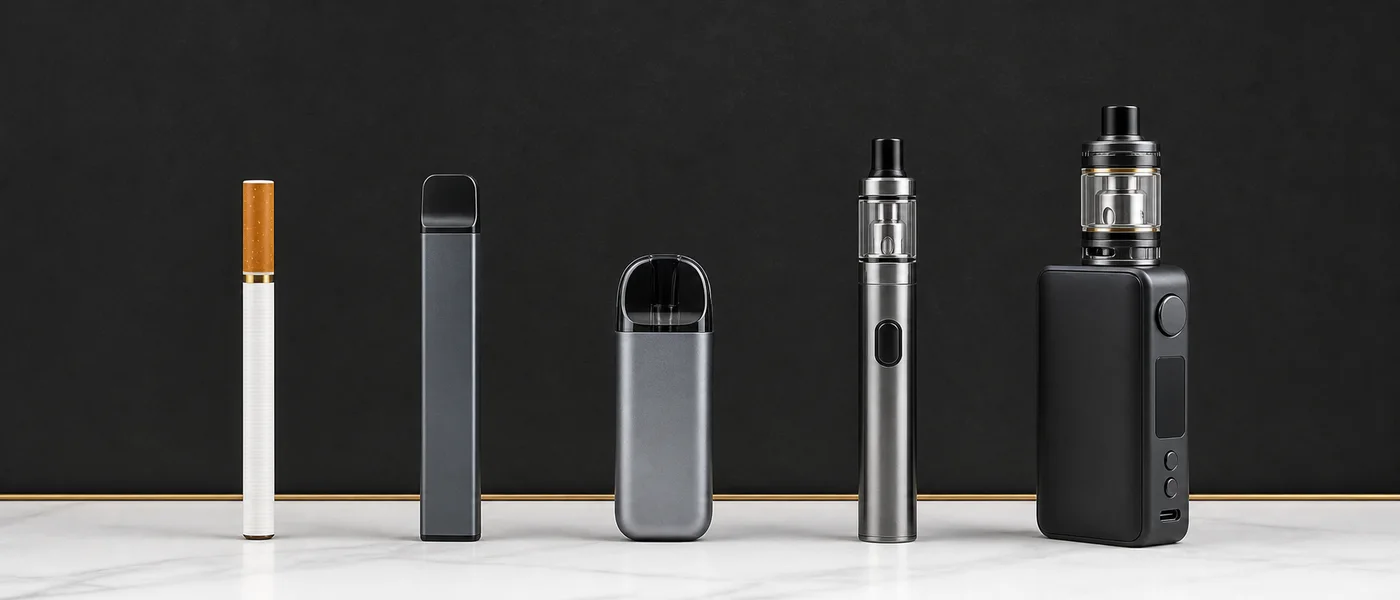
“Vape pen” usually describes a slim cylindrical device. “Mod” refers to larger hardware with more adjustable power and a separate tank. These names describe form and features, not safety level. A small device can still contain nicotine, and a large device is not automatically suitable for every liquid or user.
Main types of vaping devices
| Device type | Liquid system | Typical controls | Maintenance |
|---|---|---|---|
| Cigalike | Usually sealed or cartridge-based | Minimal, often draw-activated | Low |
| Disposable-style vape | Closed and prefilled | Usually draw-activated | No refilling; requires e-waste disposal |
| Closed pod | Replaceable prefilled pod | Minimal | Charge device and replace pod |
| Open pod | Refillable pod | Simple or lightly adjustable | Refill, clean, and replace pod or coil |
| Vape pen | Refillable tank or pod | Button or simple power options | Regular coil and tank care |
| Regulated mod | Refillable tank | Adjustable power and protections | Higher; requires correct setup |
What is inside e-liquid?
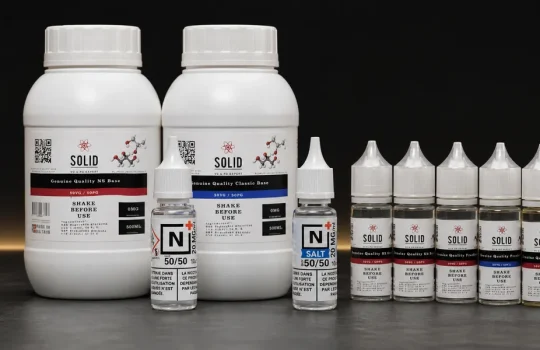
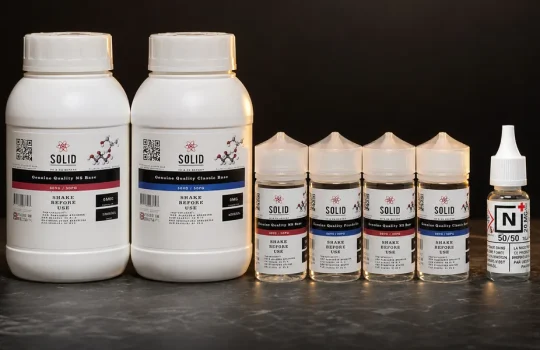
Most e-liquids use propylene glycol (PG), vegetable glycerine (VG), flavorings, and optional nicotine. PG is relatively thin and carries flavor efficiently. VG is thicker and contributes more to visible aerosol. The ratio affects flow, coil compatibility, throat sensation, and aerosol density.
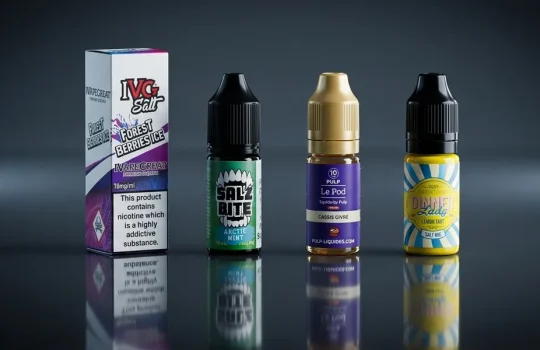
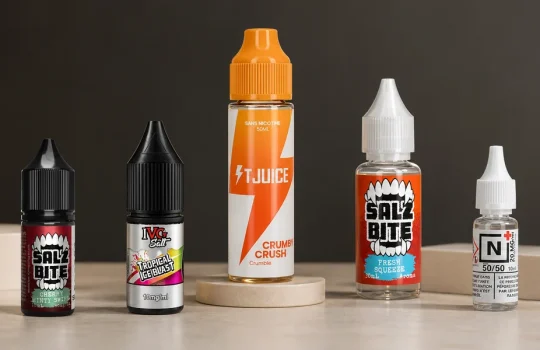
Nicotine can be absent, supplied as conventional freebase nicotine, or formulated as nicotine salts. Strength is normally expressed in milligrams per milliliter. A higher number does not mean better quality, and strength should never be chosen from flavor alone. The dedicated e-liquid types guide explains ratios, nicotine formats, and flavor families in detail. The live e-liquid category also shows the filters currently used by VSHUB24, including strength, volume, and VG/PG density.
Does every vape contain nicotine?
No. Both nicotine-containing and nicotine-free liquids exist, but packaging and the product page must be checked. Nicotine is highly addictive. It is especially inappropriate for children and adolescents, and health authorities advise against vaping during pregnancy. Nicotine-free does not mean risk-free because the aerosol can still contain other substances and fine particles.
Vaping compared with smoking
Smoking burns tobacco and produces smoke containing tar, carbon monoxide, and many toxic combustion products. Vaping heats a liquid without burning tobacco. The UK NHS says regulated nicotine vaping is likely to be far less harmful than smoking and may help adults stop smoking, but also states that vaping is not risk-free and is not recommended for non-smokers. The CDC similarly notes that e-cigarette aerosol generally contains fewer harmful chemicals than cigarette smoke, while emphasizing that this does not make it safe.
The best health outcome is to use neither. For an adult who already smokes, completely replacing cigarettes may reduce exposure to combustion toxins. Continuing to smoke and vape together, known as dual use, does not deliver the same benefit as stopping cigarettes completely. Long-term vaping effects are still being studied, and risk differs by product and use pattern.
No combustion
A vape heats liquid rather than burning tobacco, so the output is aerosol rather than cigarette smoke.
Not harmless
Aerosol may contain nicotine, particles, metals, volatile compounds, and other potentially harmful substances.
Adult cessation context
Potential harm reduction applies to adults who smoke and switch completely, not to non-smokers taking up vaping.
What does vaping feel like?
Users often describe a “throat hit,” which is a sensation at the back of the throat. It varies with nicotine strength and formulation, PG/VG ratio, cooling ingredients, airflow, and power. Aerosol temperature and density also change between a low-power pod and a larger tank.
Flavor can range from fruit and mint to dessert, drink, and tobacco profiles. A flavor name does not reveal nicotine strength or device compatibility. Those details must be checked separately on the label. Never taste or swallow e-liquid, and wash exposed skin if a leak occurs.
Common beginner misunderstandings
- “It is only water vapor.” It is an aerosol formed from e-liquid and can contain nicotine and other substances.
- “Every liquid fits every vape.” Thick high-VG liquid, strong nicotine salt, and high-power hardware are not universally compatible.
- “A burnt taste needs more power.” It may indicate a dry or worn coil. Stop and inspect the setup instead of continuing.
- “Any cable or charger is fine.” Follow the manufacturer’s charging instructions and never use damaged equipment.
- “No nicotine means safe.” Nicotine-free aerosol is not automatically harmless, and Polish restrictions also cover nicotine-free e-cigarettes.
- “Disposable means household bin.” A device with a battery is electrical waste and should follow local collection rules.
Basic safety checklist
- Read the device, coil, and e-liquid instructions before use.
- Keep e-liquid and devices locked away from children and pets.
- Use compatible pods, coils, liquids, batteries, and charging equipment.
- Stop using a device that is damaged, leaking badly, overheating, or behaving unusually.
- Charge on a stable, non-flammable surface and do not leave it charging unattended.
- Replace a coil when flavor deteriorates or the manufacturer’s instructions require it.
- Take batteries and complete disposable devices to a suitable electrical-waste collection point.
For more detail, see the guides to vape coils, priming coils, and vape battery safety.
Is vaping legal in Poland?
Vaping products are regulated in Poland. Sales of e-cigarettes and refill containers to people under 18 are prohibited. Distance sales, including internet sales, are prohibited for e-cigarettes and refill containers; the 2025 amendment extended key restrictions to nicotine-free e-cigarettes. Use is also restricted in specified public places. The detailed e-cigarette types, safety, and laws guide summarizes the current framework and distinguishes rules already in force from proposals.
Regulations can change, and rules differ between countries. Check official guidance for the place where the product is bought and used. A website category is not proof that a particular product or sales route is legal for every visitor or destination.
Explore the VSHUB24 education and category hub
Frequently asked questions
What is vaping?
Vaping is the use of an electronic device to heat e-liquid and create an aerosol that the user inhales. The device does not burn tobacco, but its aerosol is not simply harmless water vapor.
Is vape aerosol the same as smoke?
No. Cigarette smoke comes from combustion, while vape aerosol comes from heating a liquid. The absence of combustion changes the chemical exposure, but vape aerosol can still contain nicotine and other potentially harmful substances.
Does every vape contain nicotine?
No. Nicotine-containing and nicotine-free products exist. Always check the label because flavor, device size, and packaging color do not reliably indicate nicotine content or strength.
What parts are inside a vape?
A typical vape contains a battery, control electronics or draw sensor, a pod or tank, a heating coil, absorbent wick, airflow channel, and mouthpiece. Some parts are combined in a replaceable pod.
Is vaping safe?
No form of vaping is risk-free. Health authorities distinguish it from smoking because it does not burn tobacco, but aerosol can contain nicotine and other harmful substances, and long-term effects are still being studied.
Who should not vape?
Children, young people, non-smokers, and pregnant people should not vape. Adults who smoke and want to quit should use evidence-based cessation support and seek professional advice where appropriate.
Related guides
For adults only (18+). This article provides general education, not medical or legal advice. Vaping is not risk-free. Nicotine is addictive. Children, non-smokers, and pregnant people should not vape. Polish and destination-country laws may change, so verify current official rules before possessing, buying, selling, or using a product.