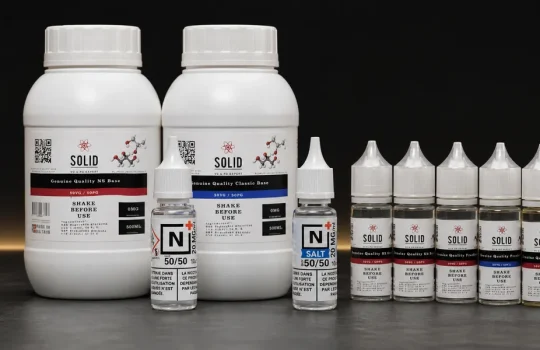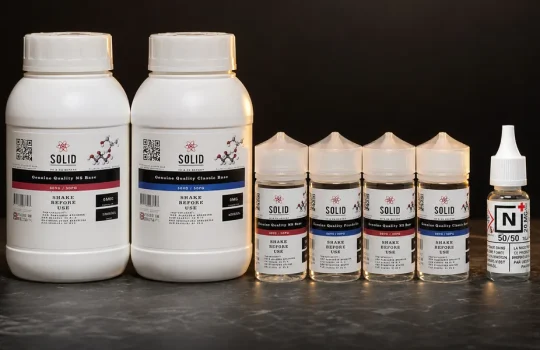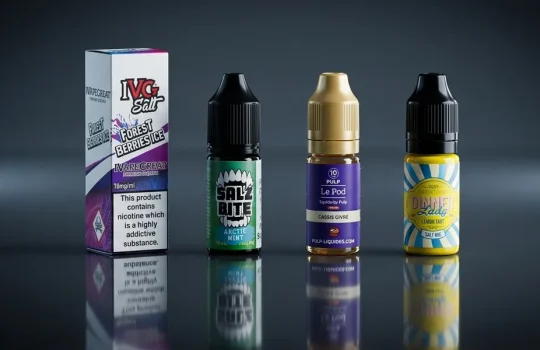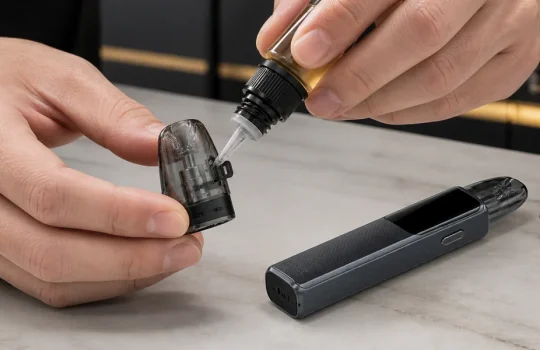
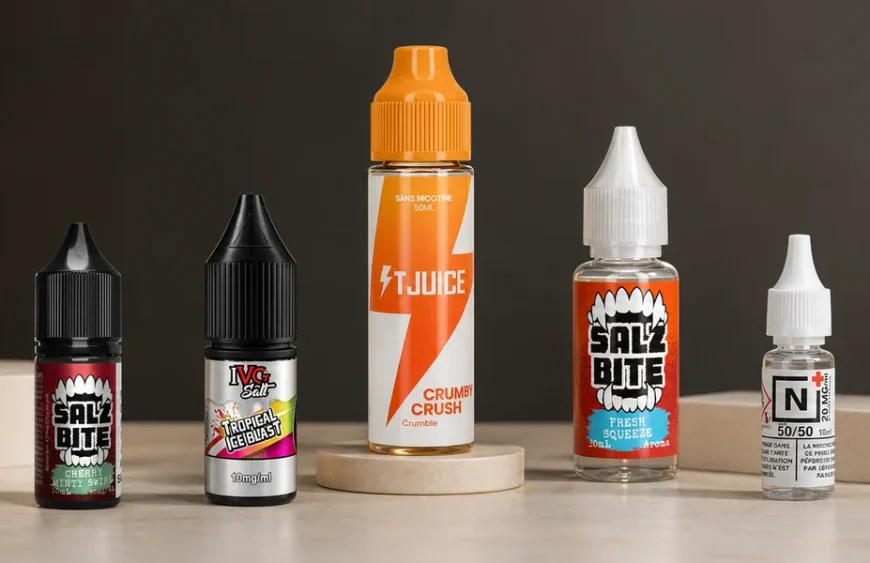
E-liquids are fluids formulated for compatible electronic cigarettes. Most contain propylene glycol (PG), vegetable glycerine (VG), flavorings, and optional nicotine. Products differ by VG/PG ratio, nicotine formulation and strength, bottle format, flavor family, and intended device. A ready-to-vape e-liquid is not the same as a base, nicotine shot, longfill, or flavor concentrate, so the label must be read before anything is put into a device.
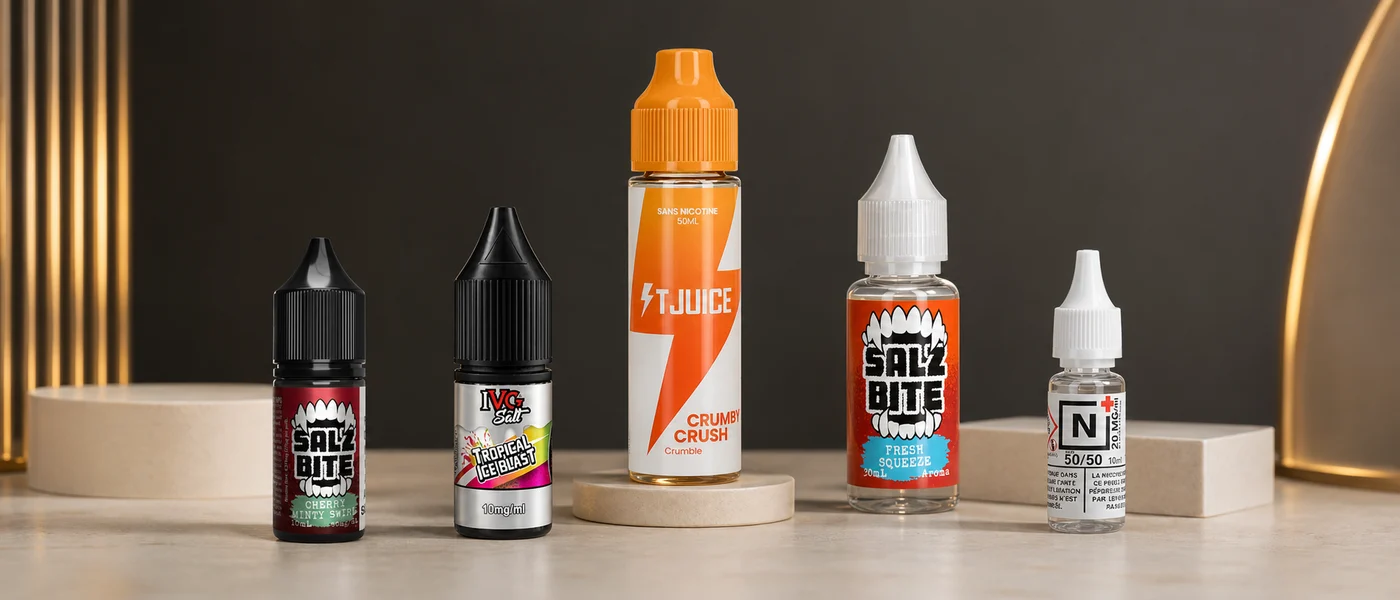
What are the main ingredients in e-liquid?
The exact formula is product-specific, but four ingredient groups are common:
- Propylene glycol (PG): a relatively thin carrier that transports flavor efficiently and contributes to throat sensation.
- Vegetable glycerine (VG): a thicker carrier associated with denser visible aerosol and a smoother-feeling base.
- Flavorings: inhalation-intended flavor mixtures supplied as part of a finished formula or separate concentrate.
- Optional nicotine: absent in 0mg liquid or present in freebase, salt, shot, or base formats.
Water or other approved formulation ingredients may appear in some products, but users should never improvise with household substances. Food-safe does not automatically mean suitable for inhalation. Check the manufacturer’s ingredient list and use only products intended for the exact application.
VG and PG explained
The ratio is usually written as two percentages, such as 50VG/50PG or 70VG/30PG. It describes how much of each main carrier is present. The order can vary between labels, so confirm which number belongs to which ingredient.
| Property | More PG | More VG |
|---|---|---|
| Viscosity | Thinner and faster-flowing | Thicker and slower-flowing |
| Flavor delivery | Often feels sharper or more direct | Often feels softer and rounder |
| Throat sensation | Usually more noticeable | Usually smoother |
| Visible aerosol | Generally lighter | Generally denser |
| Typical hardware match | Smaller liquid channels and lower-power MTL systems | Larger liquid channels and higher-flow coils |
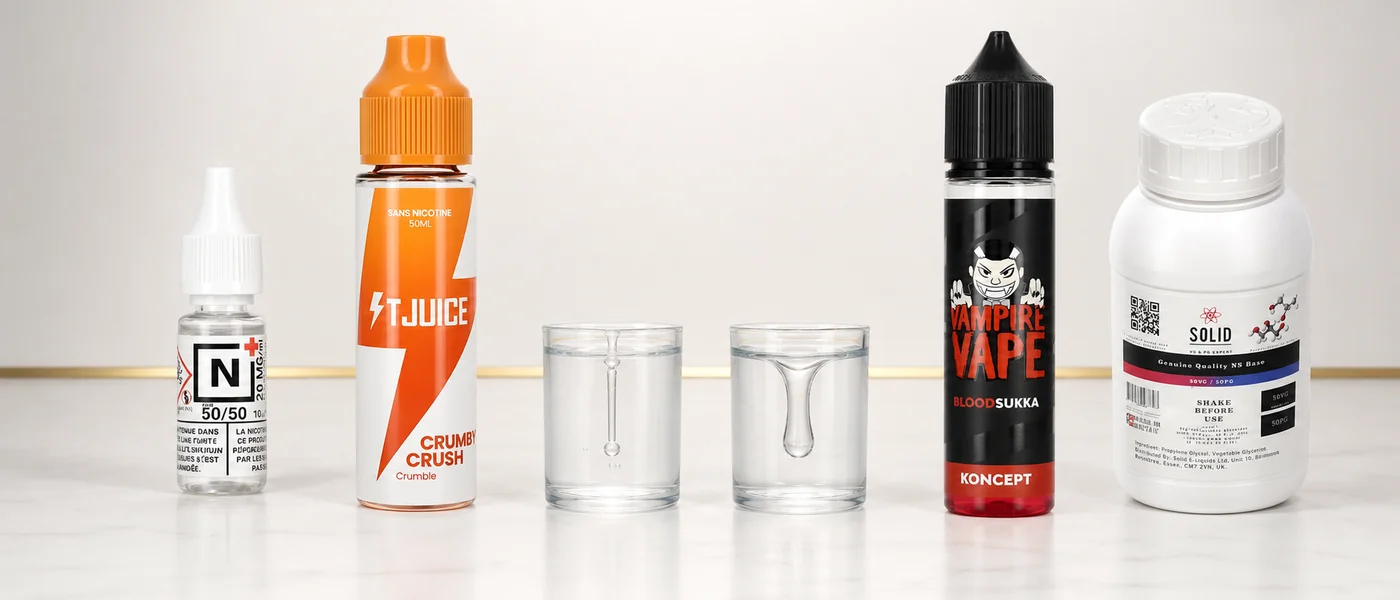
What does 50/50 e-liquid mean?
A 50/50 formula contains equal proportions of VG and PG. It balances viscosity, flavor delivery, throat sensation, and aerosol. Many low-power pod and mouth-to-lung devices are designed around this range, but “many” does not mean all. The device or coil instructions remain the deciding source.
What does 70VG/30PG mean?
A 70VG/30PG formula is thicker and generally produces denser aerosol. It is often paired with coils that have larger wick openings and a power range designed to vaporize more liquid. Putting thick liquid into a small pod that cannot feed it quickly enough may cause dry hits and coil damage.
Is high-PG liquid always better for pods?
No single ratio is universally best. Very thin liquid can leak in hardware designed for thicker formulations, while very thick liquid can feed poorly in a compact pod. Match the ratio to the pod or coil specification rather than to the device’s overall size.
Nicotine-free, freebase, and nicotine salt e-liquids
| Nicotine type | What it means | Important distinction |
|---|---|---|
| 0mg | No nicotine is intentionally added | Nicotine-free does not mean risk-free |
| Freebase nicotine | Conventional nicotine formulation used in many e-liquids | Throat sensation can become stronger as concentration rises |
| Nicotine salts | Nicotine formulated with an acid to change its chemical form and sensory profile | Often used in compact low-power systems; strength still requires careful checking |
| Nicotine shot | A measured nicotine-containing liquid intended to be added to a compatible nicotine-free format | It is a mixing component, not a universal dose |
Nicotine is addictive. Strength is normally stated in milligrams per milliliter, such as 10mg/ml or 20mg/ml, and may also be shown as a percentage. Read the actual label rather than inferring strength from bottle size, flavor, color, or device format. The appropriate strength depends on the adult user’s needs and the amount of aerosol produced by the compatible hardware; professional cessation support can help adults who smoke make an informed choice.
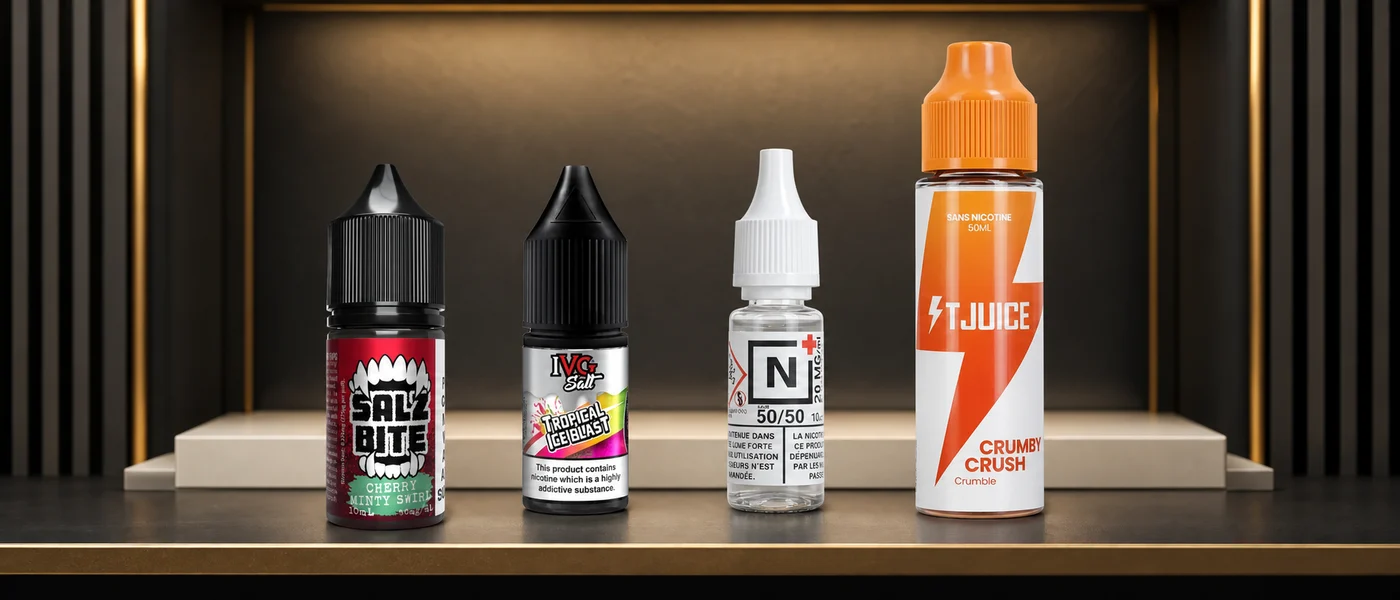
Ready-to-vape e-liquid
A ready-to-vape product is supplied at its intended VG/PG ratio, flavor concentration, and stated nicotine strength. It should not need extra aroma or base. The label should identify volume, strength, ingredients, warnings, manufacturer or importer information, and use instructions where required.
Ready-to-vape does not mean compatible with every device. A 50/50 20mg nicotine salt and a 70VG nicotine-free shortfill can both be finished e-liquids, but they suit very different coils and power ranges.
Shortfills, longfills, bases, shots, and concentrates
| Format | What is in the container | Ready to vape immediately? |
|---|---|---|
| Shortfill | Usually nicotine-free flavored liquid in a bottle with spare capacity | Often yes at 0mg; adding a compatible shot changes the final mixture |
| Longfill | Measured flavor concentrate in a larger bottle with empty space | No; it requires the specified base and, if applicable, a calculated nicotine component |
| Base | VG, PG, or a blend, sometimes with nicotine depending on the product | Not necessarily; unflavored base is a mixing component |
| Nicotine shot | Small measured nicotine-containing liquid | It is intended as a component for a compatible mixture |
| Flavor concentrate or aroma | Concentrated flavoring | No. Never vape concentrate undiluted. |
Mixing requires exact volume, target nicotine strength, carrier ratio, concentrate percentage, and clean equipment. Guessing can create an incorrect strength or an incompatible ratio. Start with the how to make e-liquid guide, nicotine base guide, and the article on longfills before handling components.
Real product examples by e-liquid format
These VSHUB24 products show how the formats above look in practice. Bottle shape and artwork are not enough to identify a product, so check the type, volume, nicotine information, VG/PG ratio, and preparation instructions on its product page.
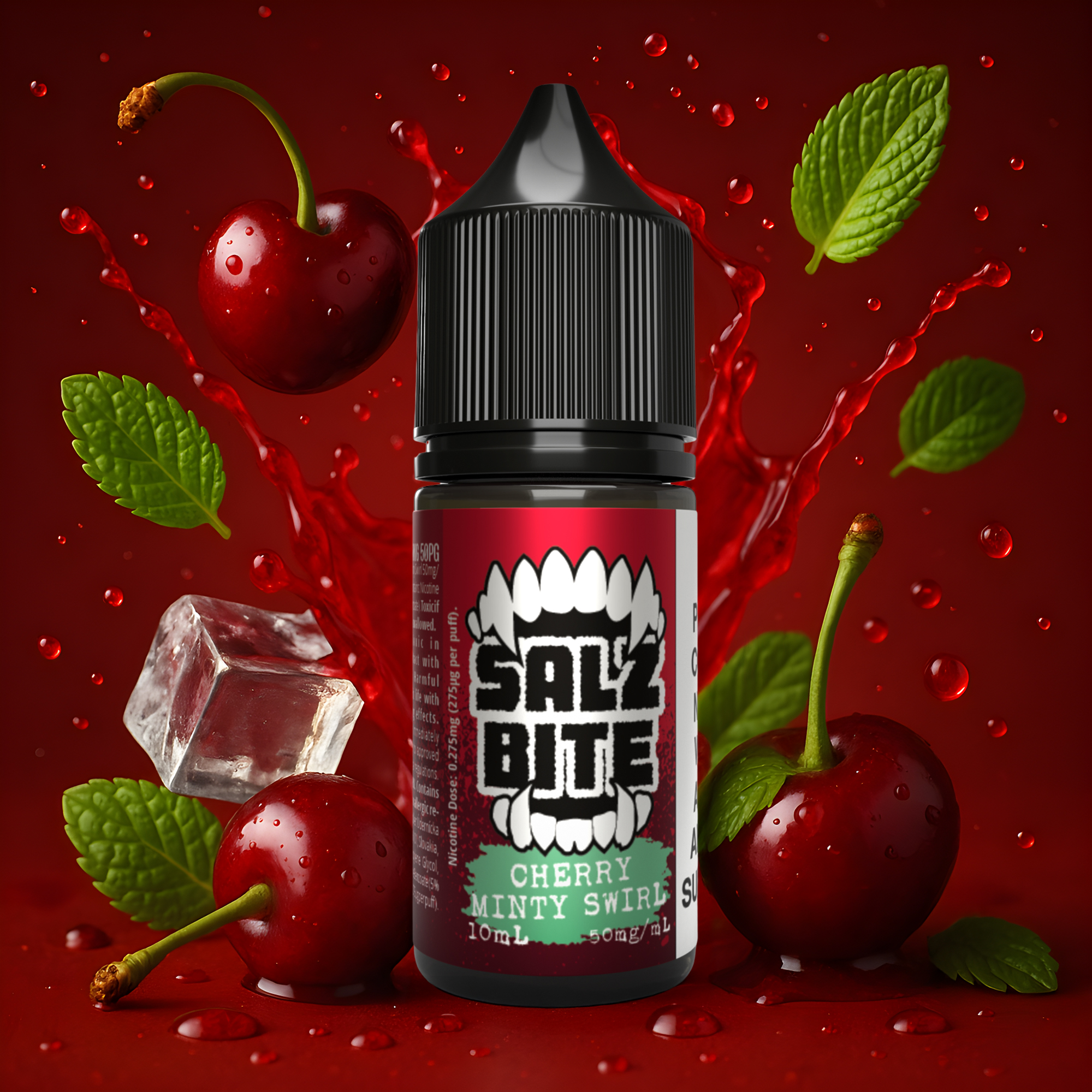
Cherry Minty Swirl 10ml 20mg Salz Bite
A compact finished nicotine-salt liquid with a cherry and mint flavor profile.
View product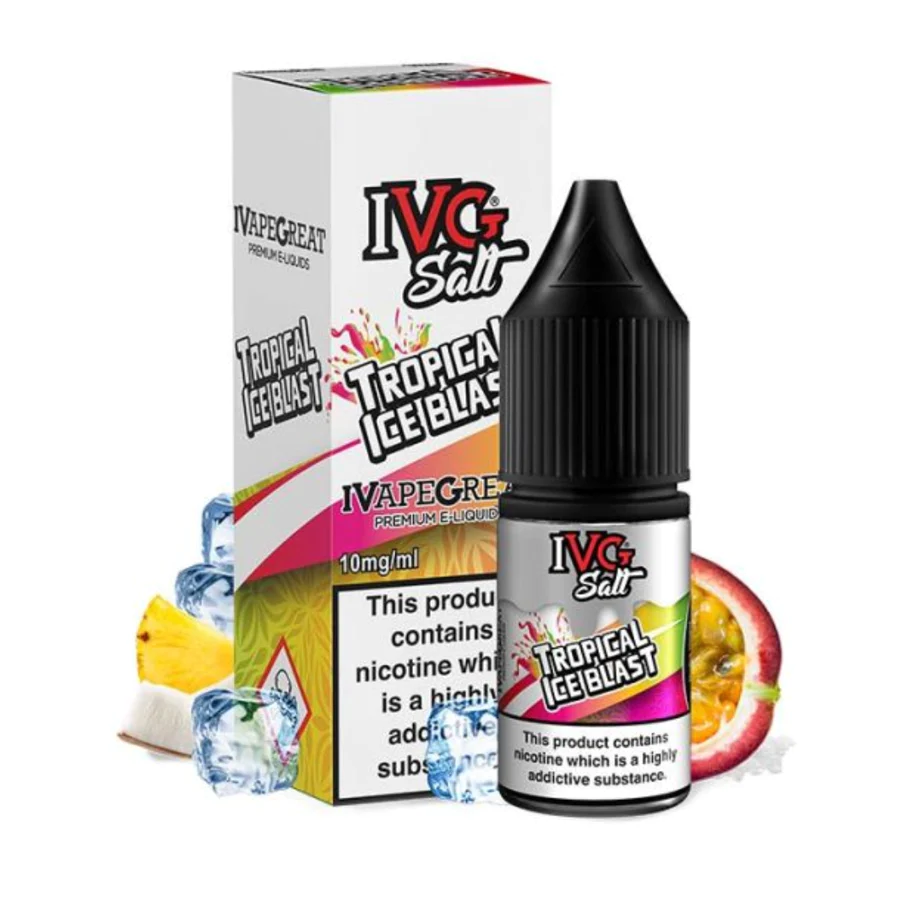
Tropical Ice Blast 20mg 10ml IVG Salts
A finished nicotine-salt format with a tropical fruit and cooling flavor direction.
View product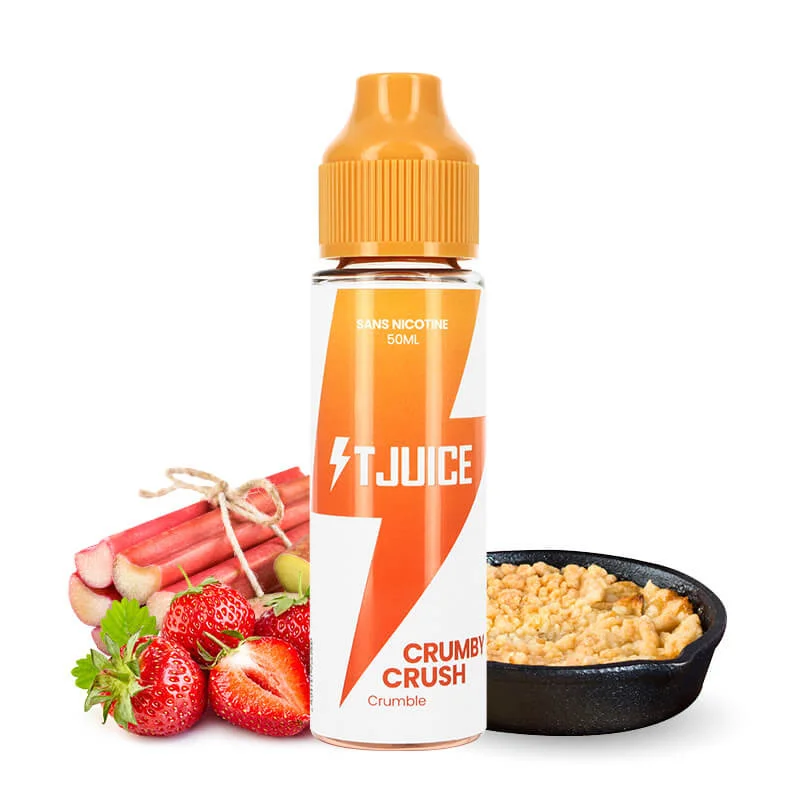
Crumby Crush 50ml 0mg 60/40 TJuice
A larger nicotine-free shortfill that illustrates the 60VG/40PG carrier ratio.
View product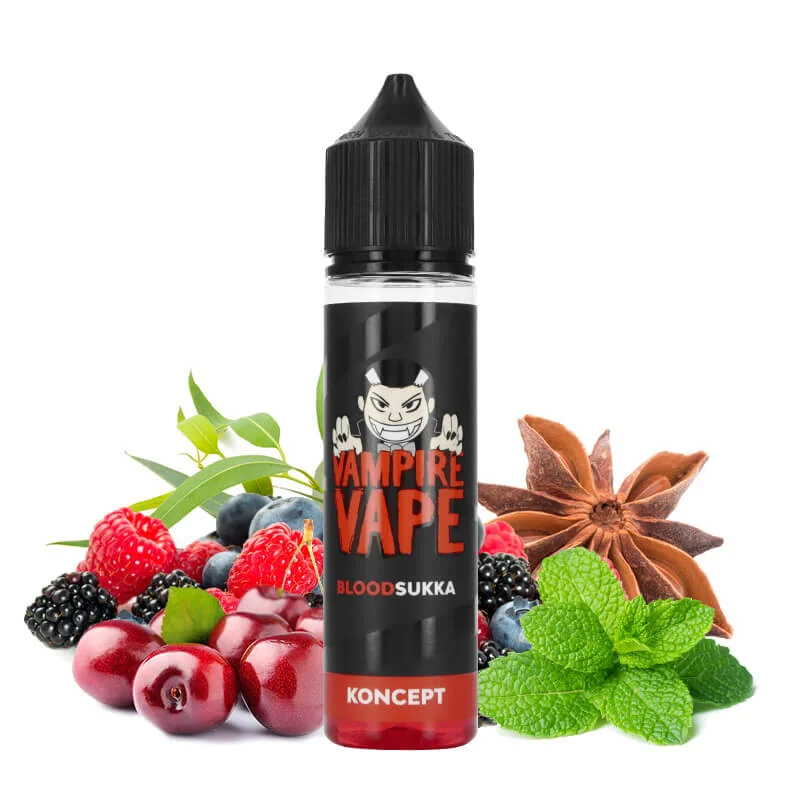
Blood Sukka 50ml 0mg 70/30 Vampire Vape
A higher-VG nicotine-free shortfill that illustrates the thicker 70VG/30PG format.
View product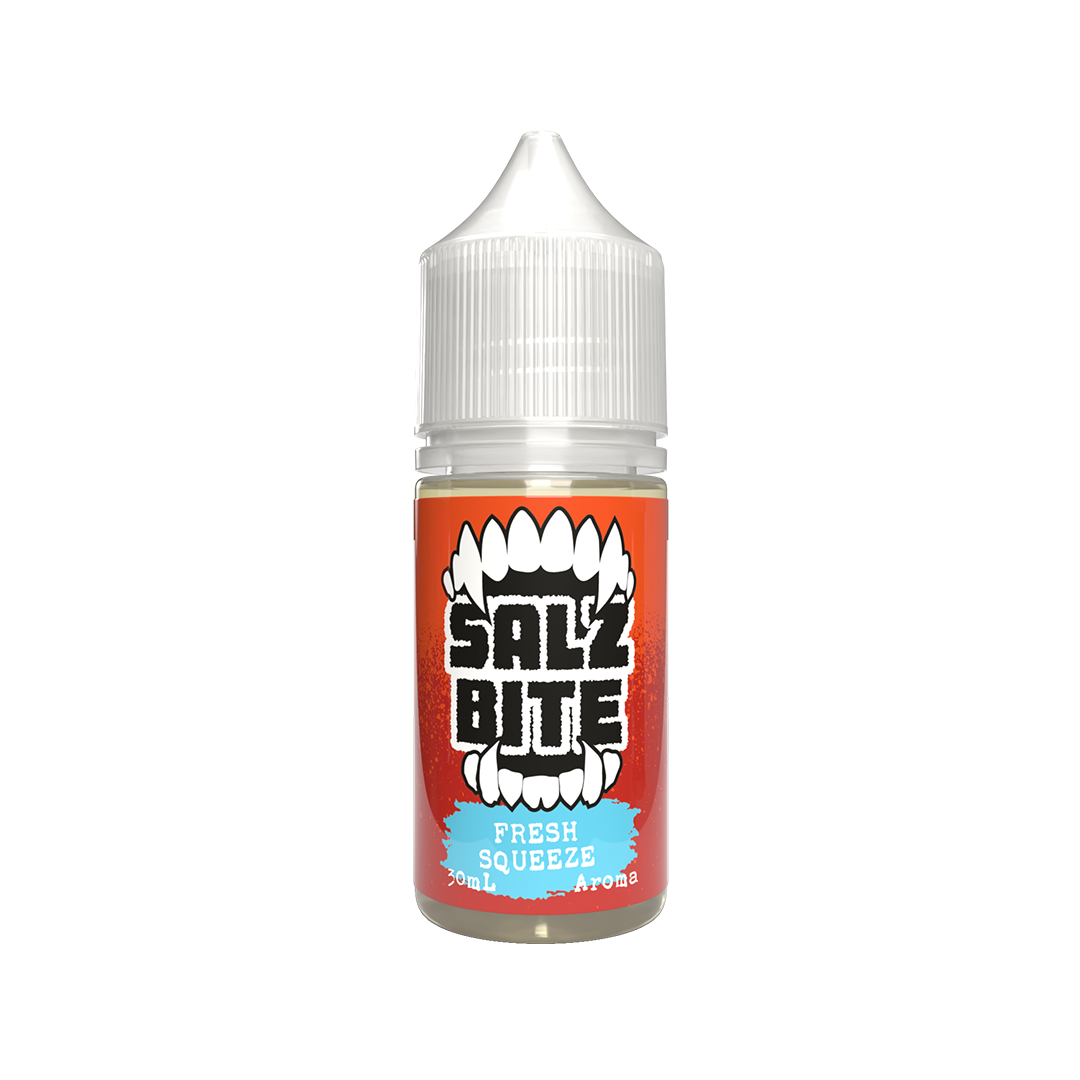
Fresh Squeeze 30ml Aroma Salz Bite
A concentrated flavor component that requires the preparation specified by the manufacturer.
View product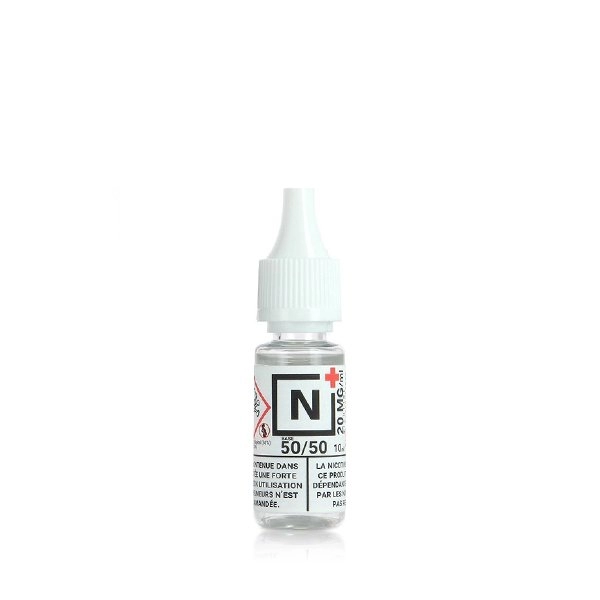
Classic Nicotine Shot 20mg 50/50 10ml N+
A measured nicotine component intended for a compatible, correctly calculated mixture.
View productE-liquid flavor families
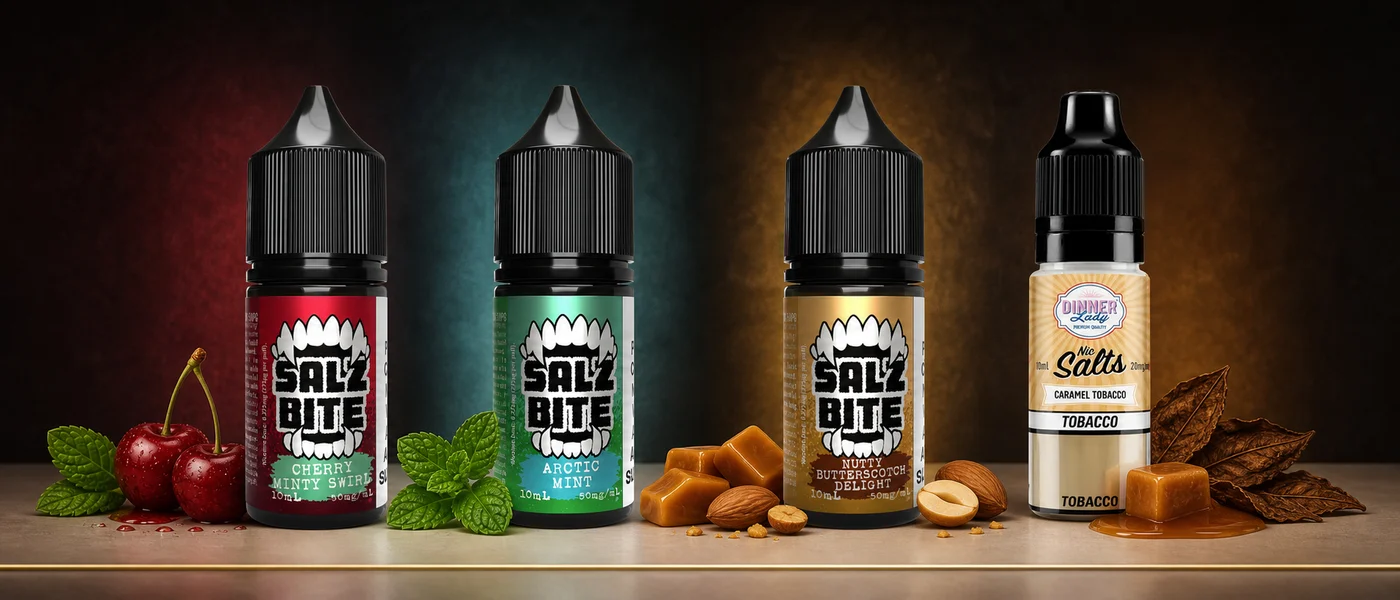
Flavor names describe the sensory direction, not nicotine strength or chemistry. The main families include:
- Fruit: single fruits, mixed berries, tropical blends, citrus, and melon.
- Fresh and cooling: mint, menthol, ice, frost, or cooling agents combined with another flavor.
- Dessert: custard, pastry, vanilla, cream, caramel, and bakery-style profiles.
- Drink-inspired: lemonade, soda, coffee, tea, and cocktail-style profiles without actual carbonation or alcohol.
- Tobacco-inspired: dry, sweet, nutty, woody, or dessert-tobacco interpretations.
- Candy: intentionally confectionery-style fruit or sweet profiles.
“Ice” usually signals cooling, but not always mint. “Salt” identifies a nicotine formulation, not a salty taste. “Tobacco” in a flavor name does not mean the liquid contains leaf tobacco. Read the complete description instead of relying on color or one word.
How to match e-liquid to a device
Use the hardware maker’s guidance first. Three variables matter most:
- Coil and liquid-flow design: small wick openings usually need a more fluid liquid; larger openings may handle higher VG.
- Power and airflow: higher-liquid-consumption hardware is generally paired with lower nicotine concentrations than compact low-power pods.
- Intended nicotine format: strong nicotine salts are generally associated with low-power devices, not high-output sub-ohm setups.
Do not infer compatibility from a universal coil-resistance cutoff. Coil material, geometry, airflow, wick size, and manufacturer design all matter. The vape coil guide gives a fuller explanation.
Read the liquid
Check VG/PG ratio, nicotine type, strength, volume, and whether the product is finished or concentrated.
Read the hardware
Confirm the coil’s supported liquid range, recommended power, filling method, and replacement instructions.
Never guess
Do not dilute, strengthen, or combine products unless the exact mixture has been calculated and each component is compatible.
How to read an e-liquid label
- Volume: the amount of liquid in milliliters.
- Nicotine: 0mg or a concentration in mg/ml, sometimes also shown as a percentage.
- VG/PG ratio: the carrier balance and a major compatibility clue.
- Format: ready-to-vape, shortfill, longfill, shot, base, or concentrate.
- Flavor: the sensory description, separate from the technical specification.
- Warnings and batch information: required safety, traceability, storage, and manufacturer details.
If a bottle does not clearly identify what it contains, do not put it into a device. Avoid unsealed, untraceable, or decanted liquids.
Storage and handling
Keep e-liquid closed in its original child-resistant bottle, upright, and away from heat and direct sunlight. Store it where children and pets cannot access it. Do not swallow it. Avoid skin and eye contact, follow the label after exposure, and seek appropriate medical or poison-center help for accidental ingestion.
Color may darken over time, especially in nicotine-containing liquid, but appearance alone cannot prove safety or freshness. Check the date, smell, separation, packaging integrity, and manufacturer guidance. Dispose of unwanted liquid and containers according to local rules rather than pouring nicotine liquid into household drains.
Explore VSHUB24 e-liquid and DIY categories
Frequently asked questions
What are e-liquids?
E-liquids are fluids formulated for compatible e-cigarettes. They usually contain propylene glycol, vegetable glycerine, flavorings, and optional nicotine.
What do VG and PG mean in e-liquid?
VG means vegetable glycerine, a thicker carrier associated with denser aerosol. PG means propylene glycol, a thinner carrier associated with direct flavor delivery and more throat sensation.
What is the difference between 50/50 and 70VG/30PG?
50/50 is more fluid and is commonly used in low-power pod or MTL hardware. 70VG/30PG is thicker and is often intended for coils with larger liquid channels. Always follow the specific device and coil instructions.
What is the difference between freebase nicotine and nicotine salts?
Freebase is a conventional nicotine formulation. Nicotine salts combine nicotine with an acid to change its chemical form and sensory profile. Strength and device compatibility still need separate checking.
Do all e-liquids contain nicotine?
No. E-liquids can contain nicotine or be sold as 0mg. Nicotine-free does not mean risk-free, and the label should always be checked rather than judging by flavor or packaging.
Can flavor concentrate be vaped directly?
No. Concentrated aroma is a mixing ingredient and must not be vaped undiluted. Use only the specified percentage in a calculated, compatible recipe and follow the manufacturer’s instructions.
Related guides
For adults only (18+). This article provides general education, not medical or toxicological advice. Vaping is not risk-free, and nicotine is addictive. Never swallow e-liquid or vape flavor concentrate undiluted. Keep every liquid and component away from children and pets, and follow the product and device instructions.