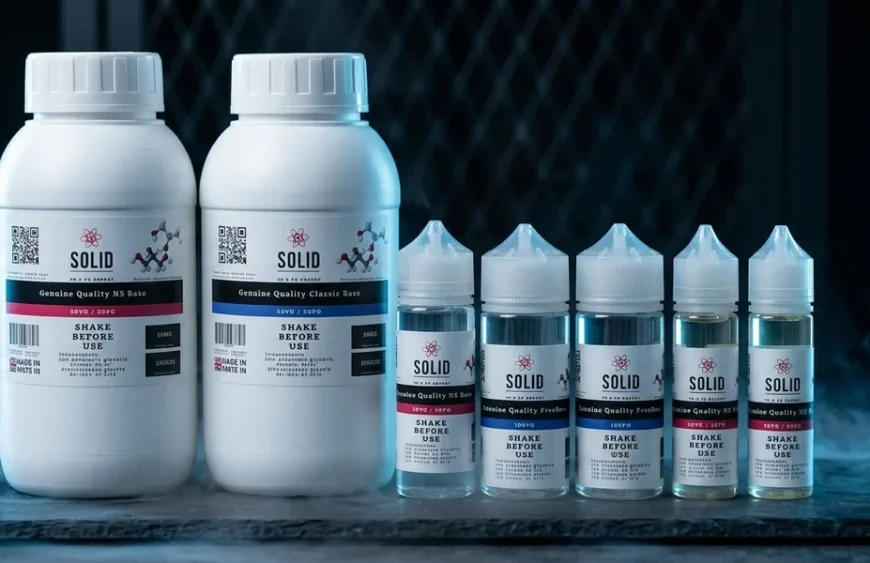
DIY e-liquid bases let an experienced adult control the carrier ratio, flavour percentage, and optional nicotine strength of a finished recipe. That control begins on paper, not at the bottle. Decide the final volume and specifications first, use the numbers printed on every ingredient, and measure each component accurately.
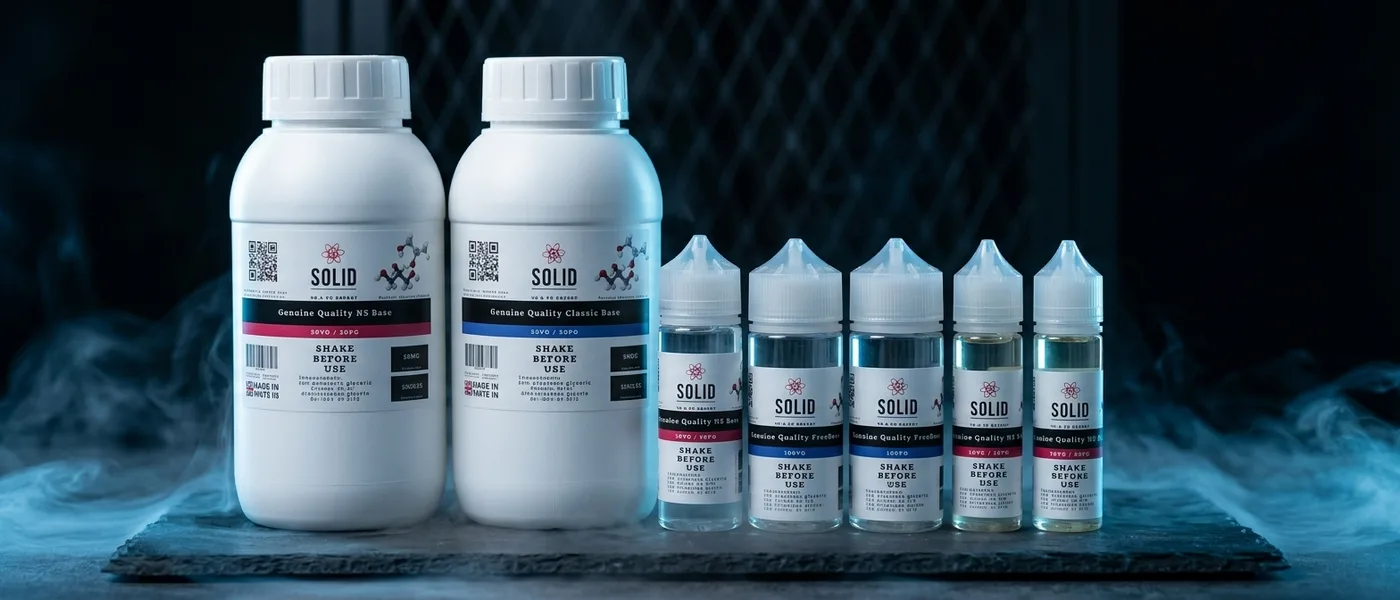
What goes into a DIY e-liquid base?
A finished DIY liquid normally combines a carrier base, a flavour concentrate, and optionally a nicotine component. The carrier is vegetable glycerine (VG), propylene glycol (PG), or a pre-mixed proportion of both. The aroma supplies flavour. Nicotine may come from a compliant shot or from a correctly labelled pre-nicotinised base.
These ingredients are not interchangeable. A flavour concentrate is not intended to be vaped undiluted. Likewise, a nicotine shot is not a flavouring, and raw VG or PG is not a complete recipe. A finished bottle must bring each part to the intended final volume and specification.
Carrier layer
VG and PG determine viscosity and help carry flavour. Their final ratio must suit the exact coil or cartridge.
Flavour layer
Concentrate is measured according to its maker’s dosage range. Its carrier also affects the final VG/PG ratio.
Nicotine layer
Optional nicotine is calculated in mg/ml from the strength of the source liquid and the total finished volume.
Plain 0mg VG, PG, and nicotine-free base do not contain nicotine. Therefore, do not call every carrier product a nicotine base. Once nicotine is present, the bottle requires stricter handling, accurate labelling, and compliance with the rules in the market where it is supplied.
Make four decisions before measuring
- Final volume: choose the total amount the finished bottle will contain, such as 30ml or 60ml.
- Final VG/PG ratio: match viscosity to the exact device and coil. Use the VG/PG e-liquid base guide before choosing.
- Flavour percentage: follow the concentrate maker’s stated range instead of applying one universal percentage.
- Nicotine strength: decide whether the recipe is 0mg or has a calculated target in mg/ml.
Next, record the carrier ratio and strength printed on each ingredient. For example, a 50VG/50PG nicotine shot contributes both carriers, while a PG-based aroma adds PG. This information prevents the common mistake of calculating the starting base correctly but finishing at another ratio.
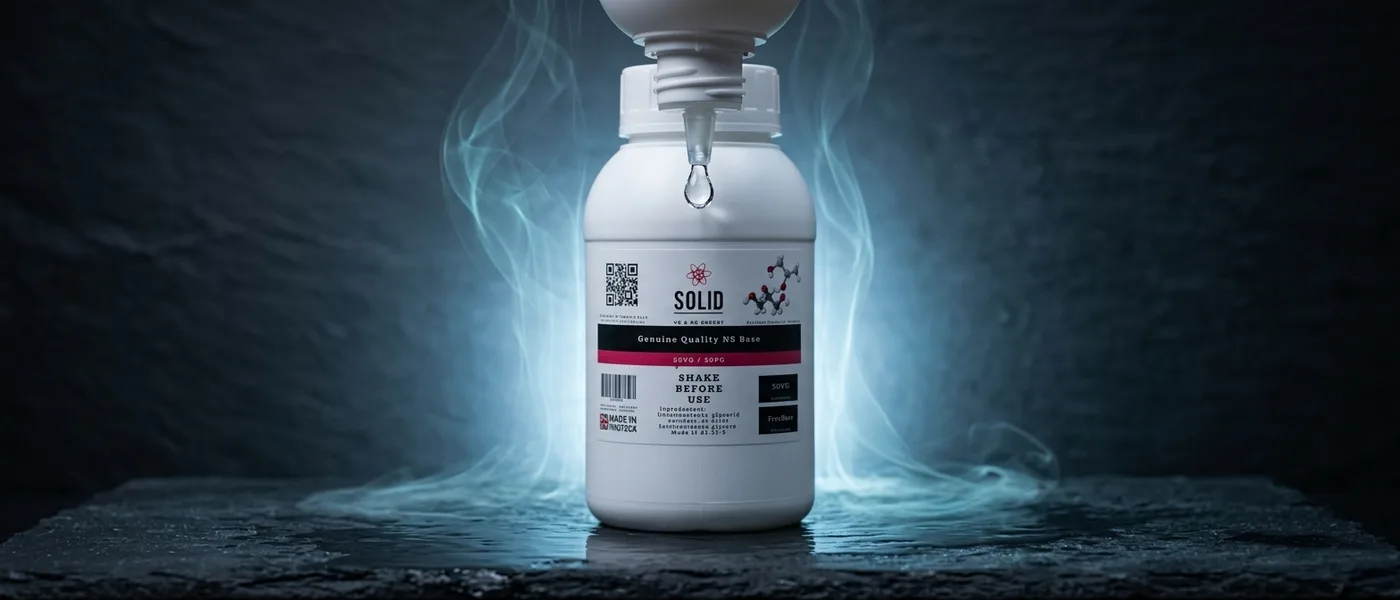
How to calculate nicotine for a DIY base
If the recipe contains nicotine, use the concentration printed on the source bottle. Do not estimate from bottle size, label colour, or the strength of another product. The core dilution formula is:
(target mg/ml × final ml) ÷ source mg/mlFor example, a 60ml finished bottle at 3mg/ml needs 180mg of nicotine in total. If the source is a 20mg/ml nicotine liquid, divide 180 by 20. The result is 9ml of that source liquid. The other 51ml consists of carrier base and flavour concentrate.
Suppose the concentrate maker specifies 10 percent for that 60ml bottle. Six millilitres would be concentrate, leaving 45ml for the remaining carrier base. However, the recipe is not complete until the source liquid’s and concentrate’s VG/PG carriers are included in the final ratio calculation.
This example demonstrates arithmetic, not a personal nicotine recommendation. Use the nicotine strength calculator guide to check the formula, and read the nicotine for e-liquid guide before selecting a form or target strength.
How to mix your own e-liquid base step by step
- Prepare a clean, stable area. Keep food and drinks away. Gather a clean bottle, accurate syringes or a scale suitable for the method, disposable nitrile gloves, paper towels, and the written recipe.
- Check every label twice. Confirm volume, nicotine strength, VG/PG ratio, concentrate dosage, expiry or best-before information, and whether the product is intended for the planned use.
- Add most of the nicotine-free carrier. Starting with base reduces the amount of concentrated ingredient exposed if a later measurement splashes. Keep enough space for aroma and optional nicotine.
- Measure the flavour concentrate. Use the maker’s percentage and a dedicated clean measure. Do not drip-count because drop size varies between nozzles and liquids.
- Add the calculated nicotine component last. Wear gloves, work slowly, and recap it immediately. If any nicotine liquid contacts skin, stop, remove contaminated clothing, wash the area, and follow the product’s first-aid directions.
- Top up, cap, and mix thoroughly. Add the remaining carrier to the exact final volume. Close the bottle before shaking, then inspect for leaks.
- Label the finished bottle. Write the date, recipe name, nicotine mg/ml, final VG/PG ratio, and any required warning. Store it closed, upright, cool, dark, and secured away from children and pets.
Base products for different DIY routes
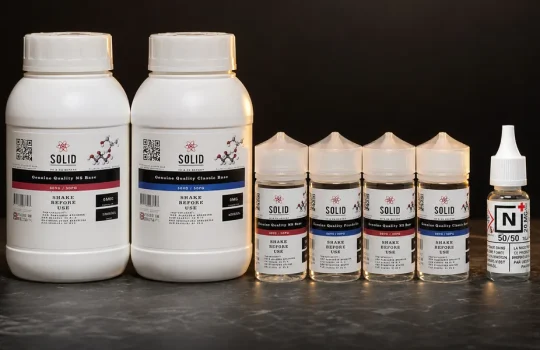
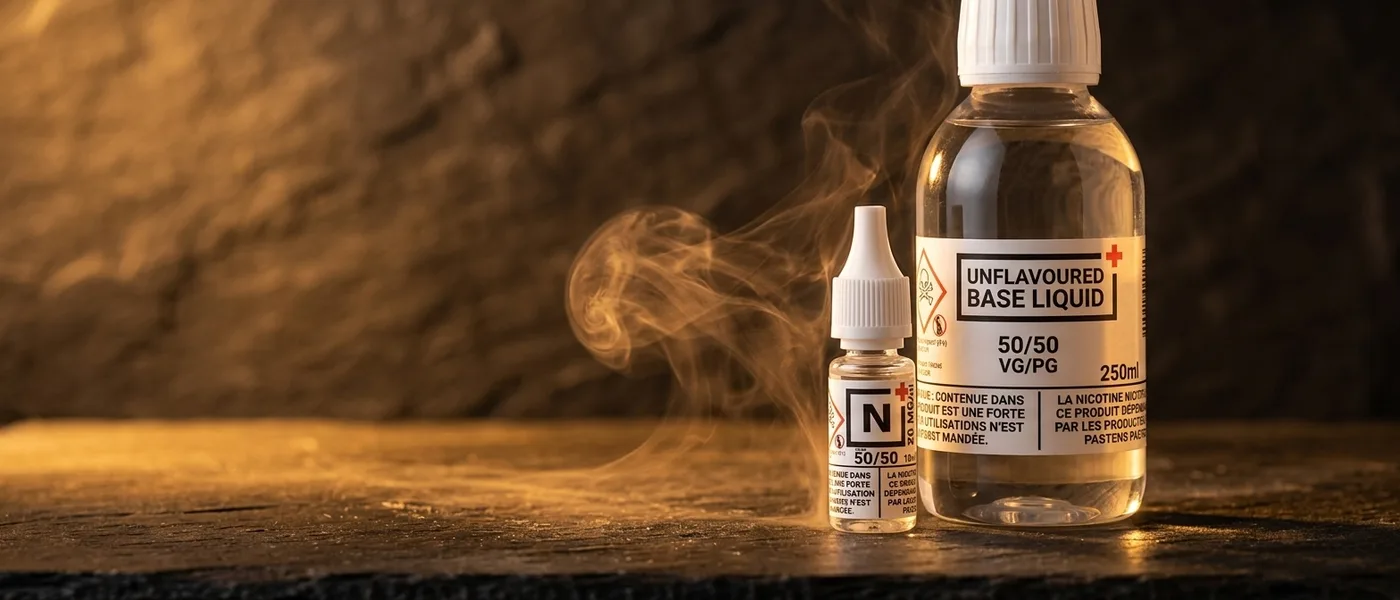
The current catalogue supports three routes: combine separate VG and PG, begin with a nicotine-free 50/50 base, or select a pre-nicotinised classic base. The six examples below were in stock when reviewed on 15 August 2026. Starting prices and variations can change, so confirm the chosen size and label on the live page.
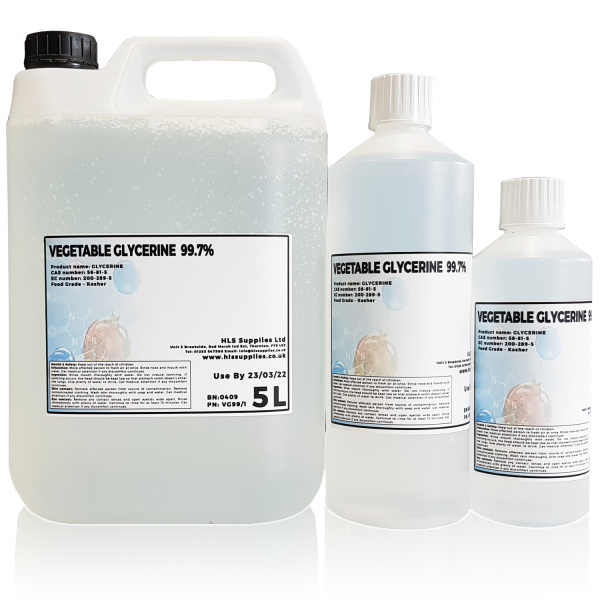
Vegetable Glycerin (VG) 99.5%
For building or adjusting the VG portion of a calculated carrier base.
Propylene glycol (PG) 99.9%
For building or adjusting the PG portion of a calculated carrier base.
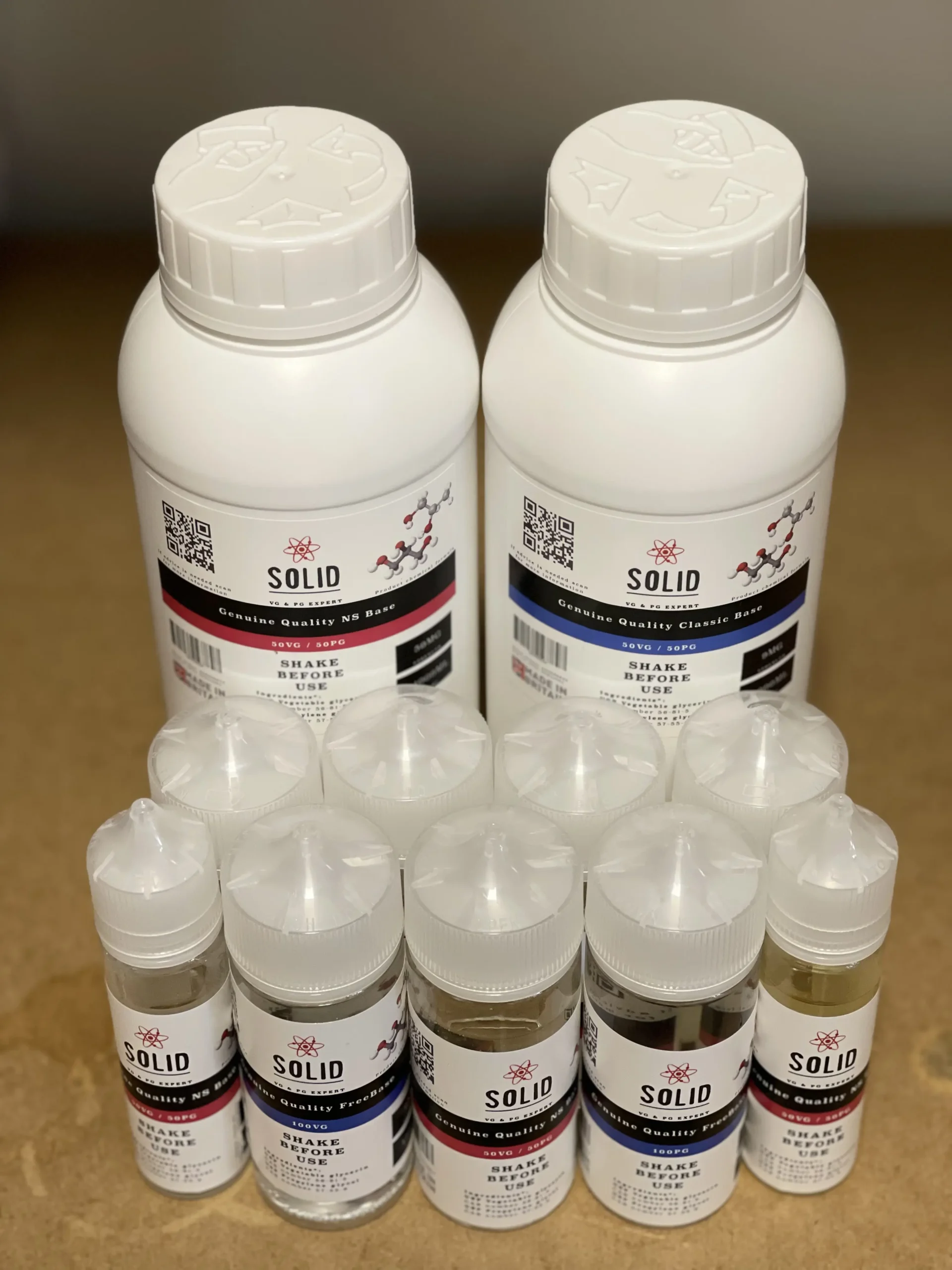
0.0% Base
A balanced nicotine-free starting base when separate carrier control is unnecessary.
0.3% Base
A pre-nicotinised classic base labelled 0.3 percent, equivalent to 3mg/ml.
0.6% Base
A pre-nicotinised classic base labelled 0.6 percent, equivalent to 6mg/ml.
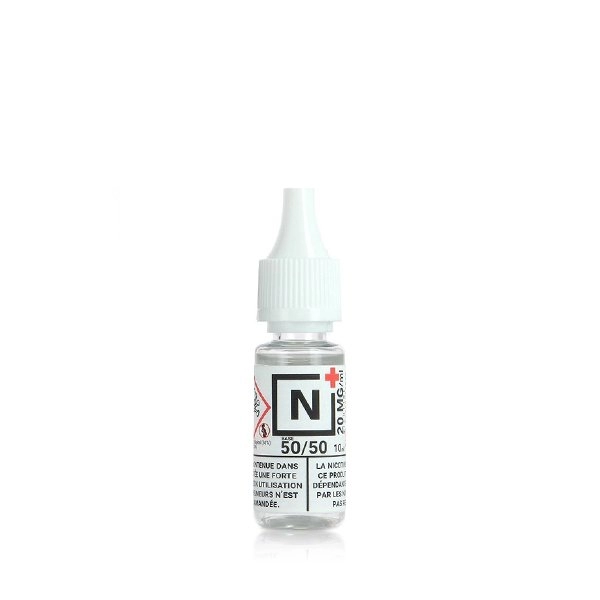
Classic Nicotine Shot 20mg N+
A measured classic nicotine component for a verified dilution calculation.
Browse all current variants through the Polish e-liquid bases category. Product choice depends on the recipe, local supply rules, and the user’s existing nicotine needs, not on which bottle has the highest number.
Ready-mixed base or separate VG and PG?
A ready 50VG/50PG base is simpler because one carrier measurement replaces two. It also keeps a repeat recipe easier to audit. However, separate VG and PG are useful when the aroma adds considerable PG or when a particular coil needs another final viscosity.
Pre-nicotinised base reduces one dilution step but fixes the starting strength. In contrast, 0mg base plus a compliant shot offers more control over the finished level. Neither route removes the need to calculate aroma volume and final VG/PG ratio.
Choose the least complex route that reaches the required specification. For a first repeatable recipe, fewer components generally mean fewer transcription and measurement errors.
Handling, storage, and quality checks
Nicotine-containing liquid can be harmful if swallowed and can create risk through skin contact. Therefore, keep the work area controlled, wear appropriate gloves, close every bottle immediately, and follow its label or safety data. If a significant exposure or ingestion occurs, seek urgent advice from the relevant poison centre or medical service and keep the product information available.
Store ingredients and finished bottles closed, upright, and away from heat and direct light. In addition, use child-resistant containers where required and never reuse a food or drink bottle. A clear date and strength label protects everyone in the household from guessing what a bottle contains.
Before filling a device, inspect the liquid. Do not use a batch with unexplained particles, an incorrect label, a damaged container, or a recipe you can no longer verify. If the aroma maker recommends a resting period, follow that product-specific instruction instead of assuming every flavour needs the same time.
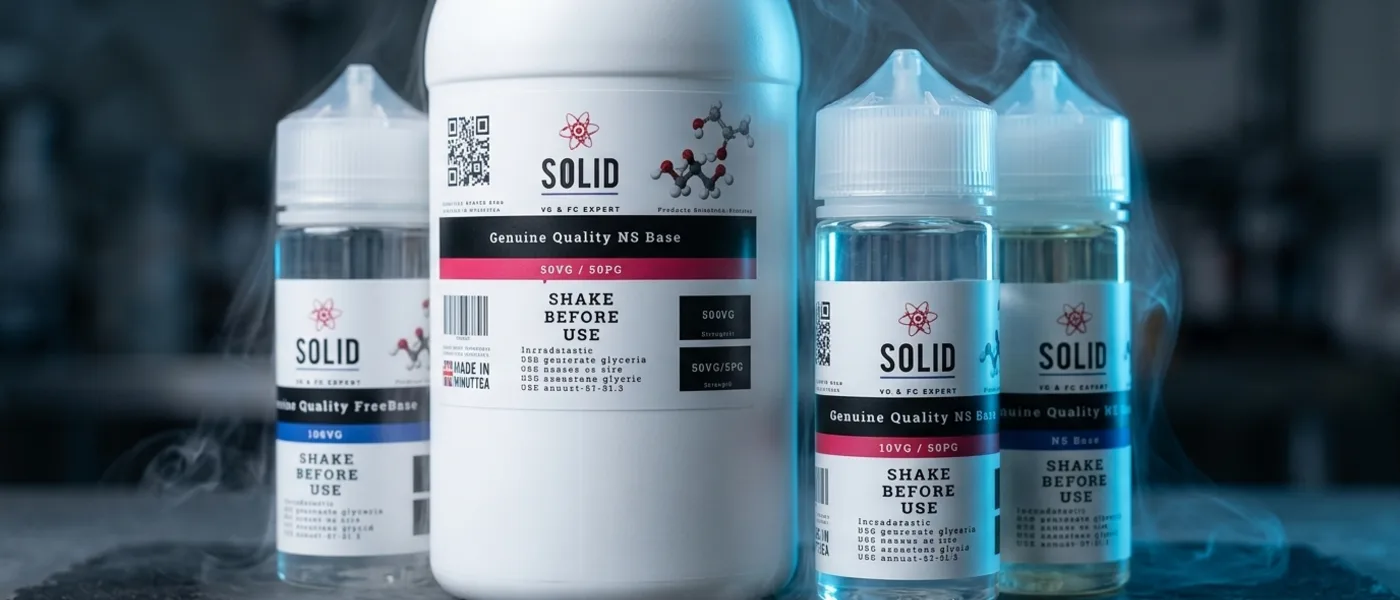
Seven DIY mixing mistakes to avoid
- Using percentages without units: write whether a number describes aroma percentage, nicotine percentage, or the VG/PG ratio.
- Confusing 0.6% with 0.6mg/ml: 0.6% nicotine is 6mg/ml because 1% equals 10mg/ml.
- Counting drops: drop volume changes with the nozzle, carrier, and temperature.
- Ignoring carrier contributions: aroma and nicotine liquid can change the final VG/PG balance.
- Rounding early: keep full calculator values until the final practical measurement.
- Mixing from memory: record the recipe and mark every measured component as it is added.
- Leaving the bottle unlabelled: a clear strength and date are essential even for a nicotine-free batch.
The practical verdict
Reliable DIY e-liquid bases come from a written specification and a checked calculation. First choose the final volume and coil-compatible ratio. Then apply the concentrate maker’s percentage, calculate optional nicotine from mg/ml, and count every ingredient’s carrier contribution.
Finally, measure with suitable equipment, cap each ingredient promptly, and label the finished bottle before it leaves the work area. If any part of the recipe is uncertain, stop and recalculate instead of trying to correct an unknown mix by taste or guesswork.
Frequently asked questions
What do I need to make a DIY e-liquid base?
You need a suitable VG/PG carrier or ready base, a flavour concentrate used at its stated dosage, an optional legally supplied nicotine component, accurate measuring equipment, a clean bottle, gloves for nicotine handling, and a written recipe.
How do I calculate nicotine for a DIY e-liquid base?
Multiply the target mg/ml by the final bottle volume, then divide by the source nicotine strength in mg/ml. The result is the millilitres of source nicotine liquid required. Check the calculation before measuring.
Can I mix e-liquid without nicotine?
Yes. Use 0mg carrier base and do not add a nicotine component. The finished liquid still needs a verified VG/PG ratio, a correctly measured concentrate, a clean bottle, and a clear 0mg label.
Is 0.6% nicotine the same as 6mg/ml?
Yes. One percent equals 10mg/ml, so 0.6% equals 6mg/ml, 0.3% equals 3mg/ml, and 1.8% equals 18mg/ml. Always confirm which unit the product label uses.
Should I measure DIY e-liquid by drops?
No. Drops are not a reliable unit because nozzle size, viscosity, and temperature change their volume. Use marked syringes, graduated measures, or a verified weight-based method with the correct ingredient densities.
How should I label a homemade e-liquid?
Record the recipe name, mixing date, nicotine strength in mg/ml, final VG/PG ratio, flavour or batch reference, and any required hazard warning. Store the closed bottle securely away from children and pets.
Continue with the e-liquid base cluster
For adults only. Nicotine is addictive and nicotine-containing liquid requires careful handling. Nicotine-naive people should not begin using it. Keep all ingredients and finished bottles secured away from children and pets. Follow product labels, local law, and poison-centre or medical guidance after an exposure. This guide explains calculations and does not provide individual medical advice.