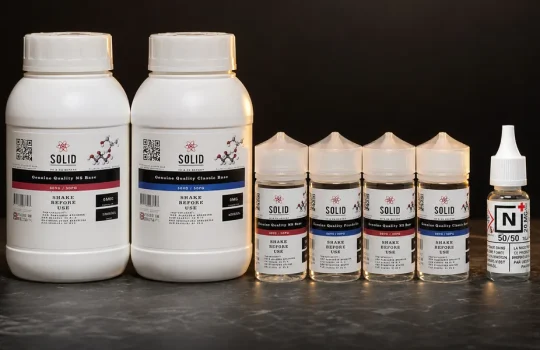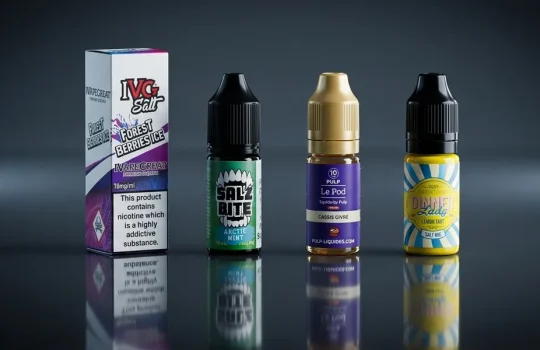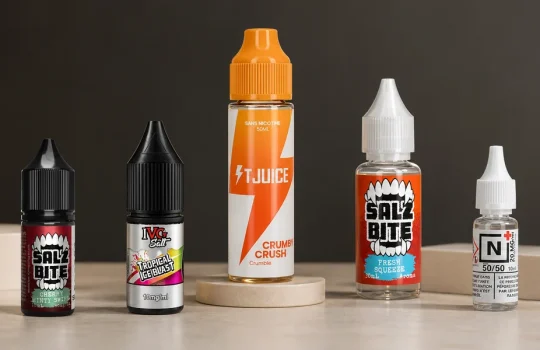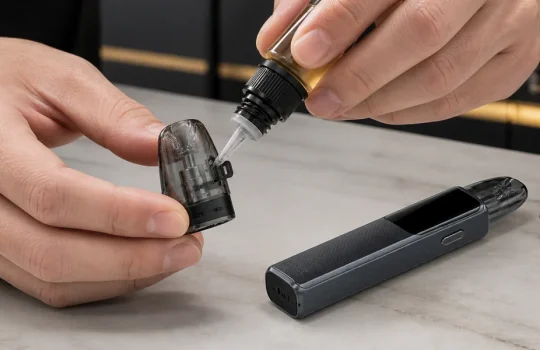
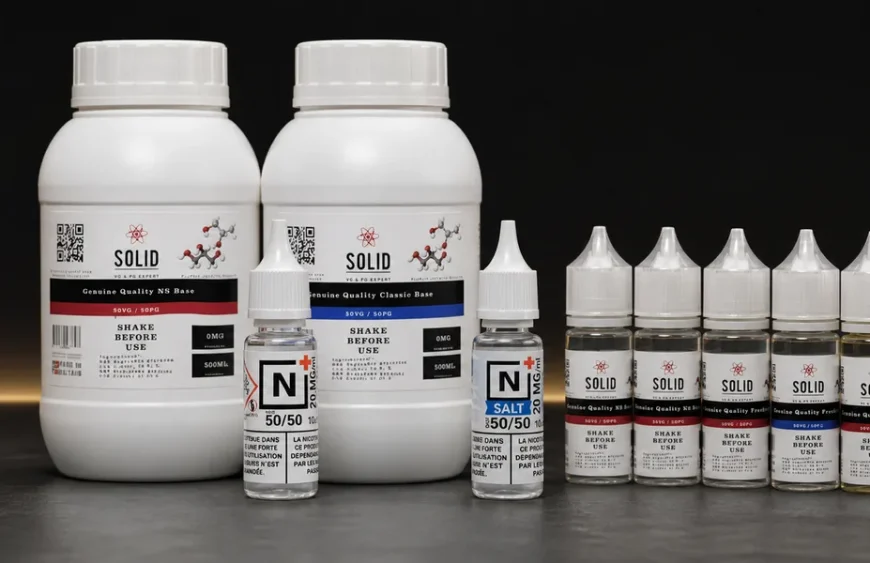
Nicotine shots are small bottles of unflavoured nicotine liquid made for a calculated dilution, not a universal “pour one in” instruction. Before opening one, an adult user must check the formulation, concentration in mg/ml, bottle volume, VG/PG carrier ratio, and the final volume of the recipe.
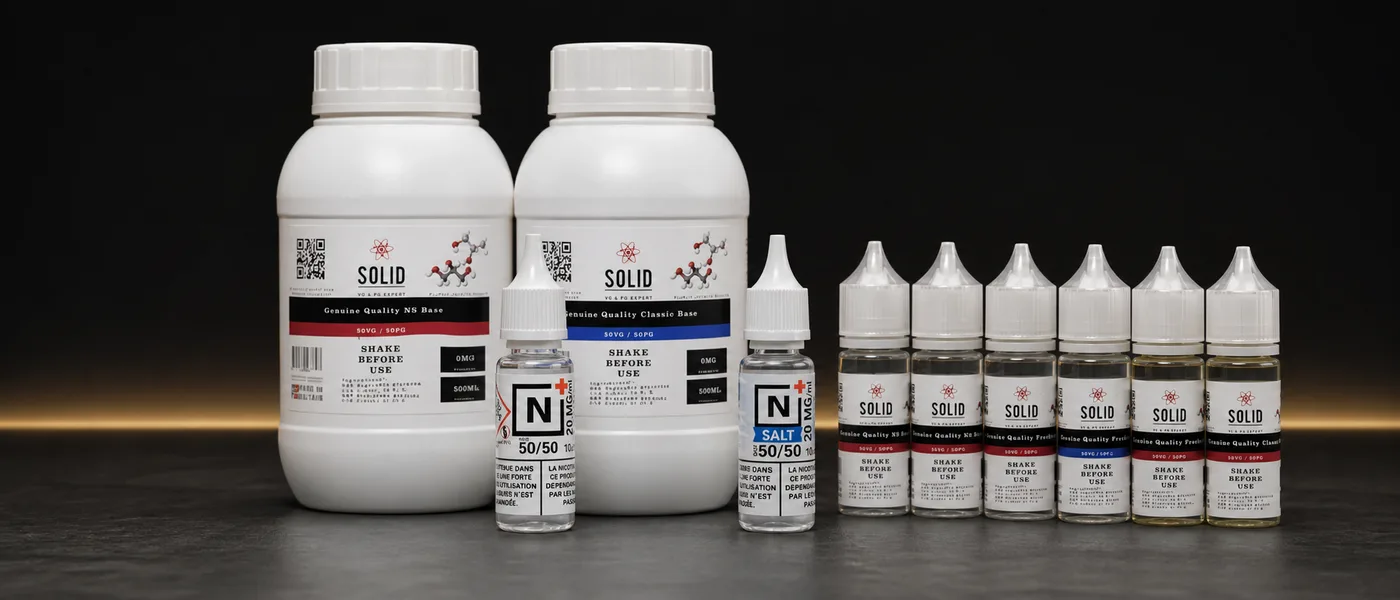
What is a nicotine shot?
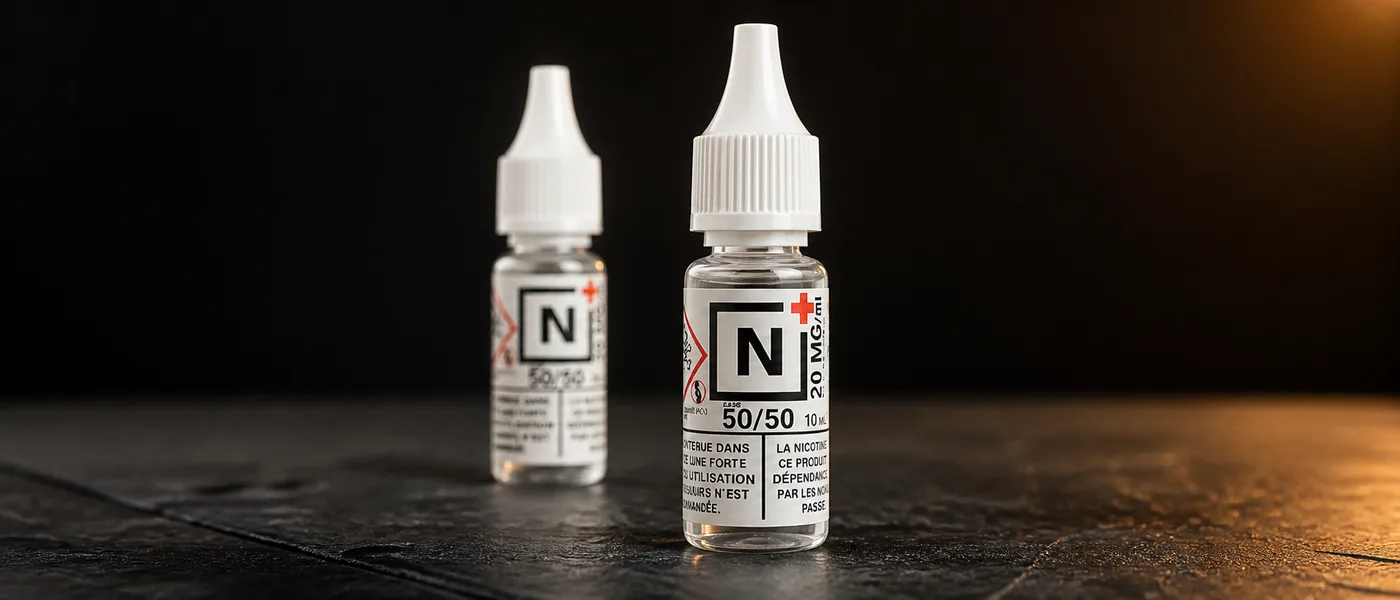
A nicotine shot, often shortened to nic shot, is an unflavoured component intended to add a known quantity of nicotine to a larger nicotine-free liquid. The label strength is a concentration. Therefore, “20mg” on a typical shot means 20mg per millilitre when the complete label states 20mg/ml, not 20mg in the entire bottle.
Secondly, volume supplies the other half of the information. For example, 10ml at 20mg/ml contains 200mg nicotine in total. If all 10ml is combined with 50ml of 0mg liquid, the result is 60ml containing 200mg, or approximately 3.33mg/ml. It is commonly described as a roughly 3mg mix, but 3.33mg/ml is the actual arithmetic.
Consequently, a shot is not a ready-flavoured e-liquid and should not be treated as one. It also is not the same as aroma concentrate, raw VG, raw PG, or a large pre-nicotinised base. The nicotine-shot mixing guide explains the calculation and recipe sequence in detail.
Read five label fields before use
In practice, a small bottle can carry several independent specifications. First, identify whether the nicotine is classic freebase or salt. Secondly, find the concentration and confirm that the unit is mg/ml. Next, read the bottle volume, followed by the VG/PG ratio. Finally, confirm that the product is described as a mixing component and check its market eligibility, batch details, warnings, and instructions.
| Label field | What it tells you | What it does not tell you |
|---|---|---|
| 20mg/ml | Nicotine concentration in each millilitre | The final strength after dilution |
| 10ml | Liquid volume in the shot bottle | Whether the recipe needs all of it |
| 50VG/50PG | The shot’s carrier composition | Its nicotine formulation |
| Classic or salt | The nicotine formulation | The concentration or compatible device |
| Batch and warning details | Traceability and handling information | A substitute for the full instructions |
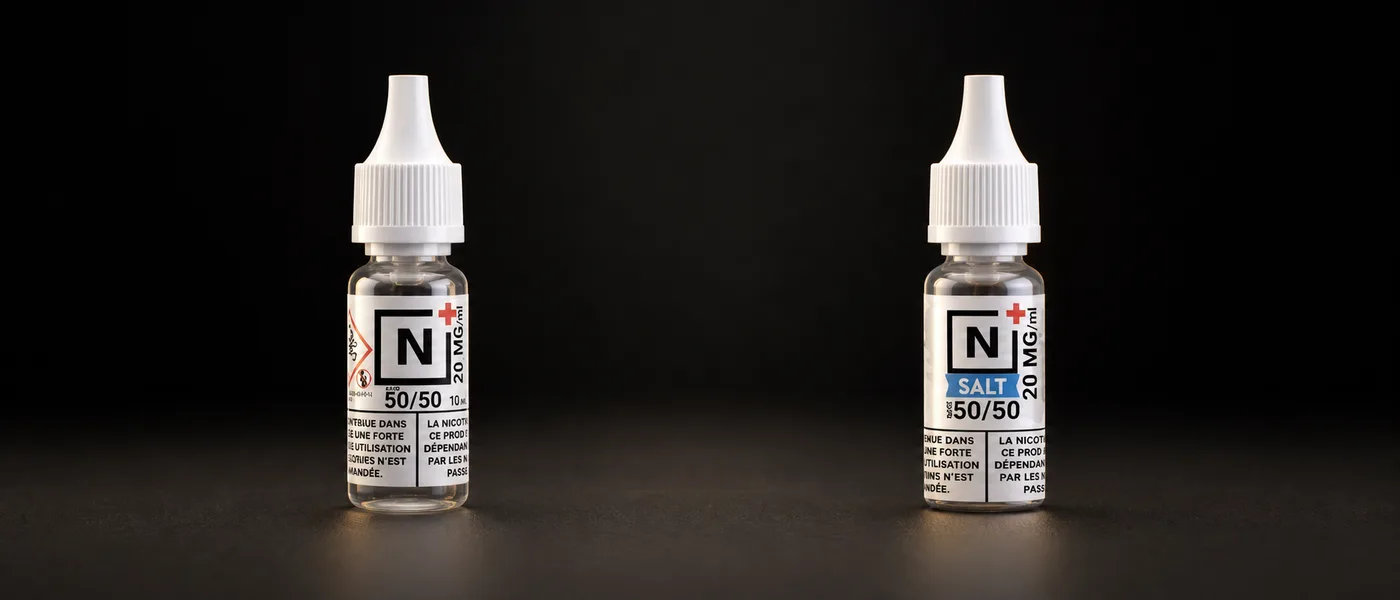
Classic and salt nicotine shots are not identical
Classic shots use freebase nicotine, the traditional formulation found in many e-liquids. Salt shots use nicotine formulated with an acid. Even so, at the same printed concentration, both contain the same quantity of nicotine per millilitre. Nevertheless, their sensory profile can differ, and salt nicotine can feel smoother at an equivalent label strength.
Smoother does not mean weaker or automatically safer. Device output, liquid consumption, puff duration, and user behaviour still affect exposure. In addition, the final liquid should suit the intended hardware. For example, compact lower-output pods and larger higher-output devices do not vaporise the same amount of liquid per puff.
Therefore, select formulation and final strength as separate decisions. The detailed salt versus freebase guide explains those differences. Meanwhile, the product label and device maker’s guidance take priority over a general blog description.
Shot, nicotine base, shortfill, or finished e-liquid?
Nicotine shot
A small unflavoured nicotine component used in a calculated dilution.
Pre-nicotinised base
An unflavoured VG/PG base that already contains a stated nicotine concentration.
Shortfill
A larger nicotine-free finished flavour with spare bottle capacity for an optional shot.
Longfill
A larger bottle containing concentrate that still needs the specified base and optional nicotine.
Finished e-liquid
A flavoured product prepared for compatible hardware without DIY dilution.
Raw VG or PG
A nicotine-free carrier ingredient that changes volume and viscosity but adds no nicotine.
As a result, confusing these formats changes both strength and flavour. For example, filling a longfill only with a shot can leave the concentrate far too strong, while adding extra base to a finished e-liquid dilutes its flavour. Check the product type before calculating anything.
How to handle nicotine shots more safely
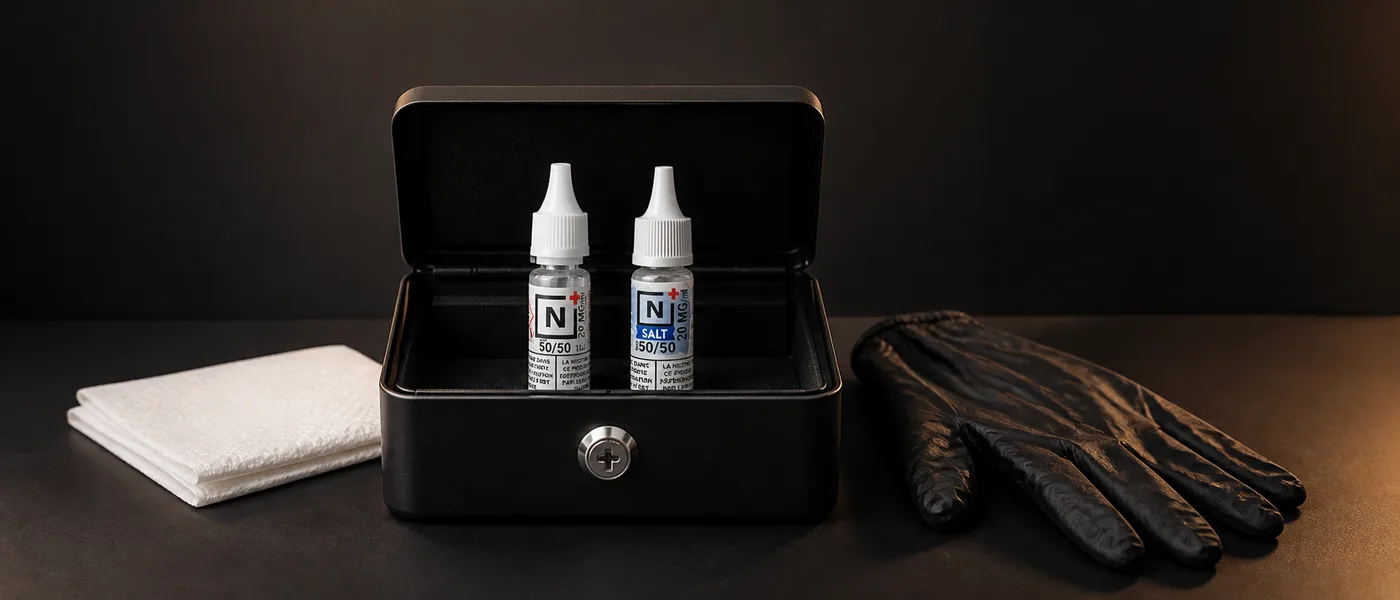
Prepare before breaking the seal. Work on a stable, wipe-clean surface away from food, drink, children, and pets. Wear disposable gloves, have absorbent paper ready, and use a clean labelled bottle with enough capacity for the complete recipe. In addition, calculate the required volume before opening the nicotine component.
- Inspect the bottle. Do not use a leaking, damaged, unlabelled, or expired product.
- Confirm the recipe. Record source mg/ml, source volume, target mg/ml, final volume, and carrier ratio.
- Measure rather than estimate. Use an appropriate graduated tool or the complete shot only when the calculation specifically requires it.
- Close every container promptly. Wipe the work surface and wash reusable tools according to their instructions.
- Label the finished bottle. Include nicotine strength, VG/PG, flavour, and mixing date.
If liquid contacts skin, remove contaminated clothing and wash the area with soap and water. If it is swallowed, reaches the eyes, or causes concerning symptoms, follow the label and contact the appropriate local poison centre or medical service promptly. Do not rely on a blog to assess an exposure.
Current shot and salt-base formats to compare
The live catalogue currently shows one in-stock classic 20mg shot and several pre-nicotinised salt bases. However, these are not interchangeable merely because they appear in the same category. In particular, larger or stronger products may have market and customer restrictions and should never be treated as consumer shot substitutes.
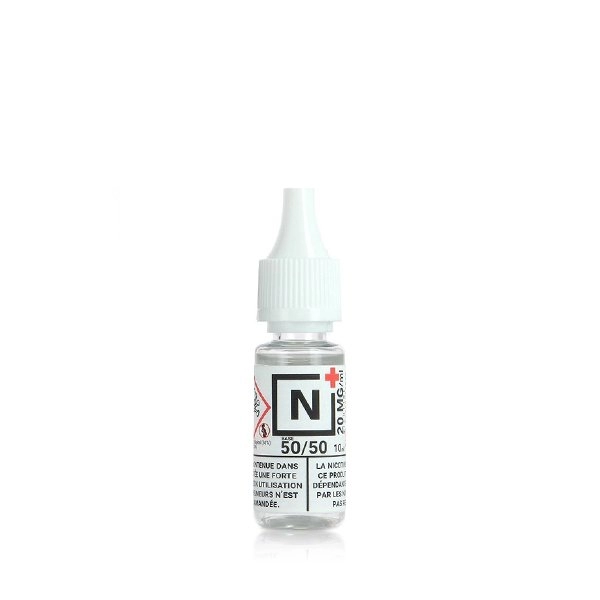
Classic Nicotine Shot 20mg N+
An in-stock 50VG/50PG shot for a verified dilution calculation.
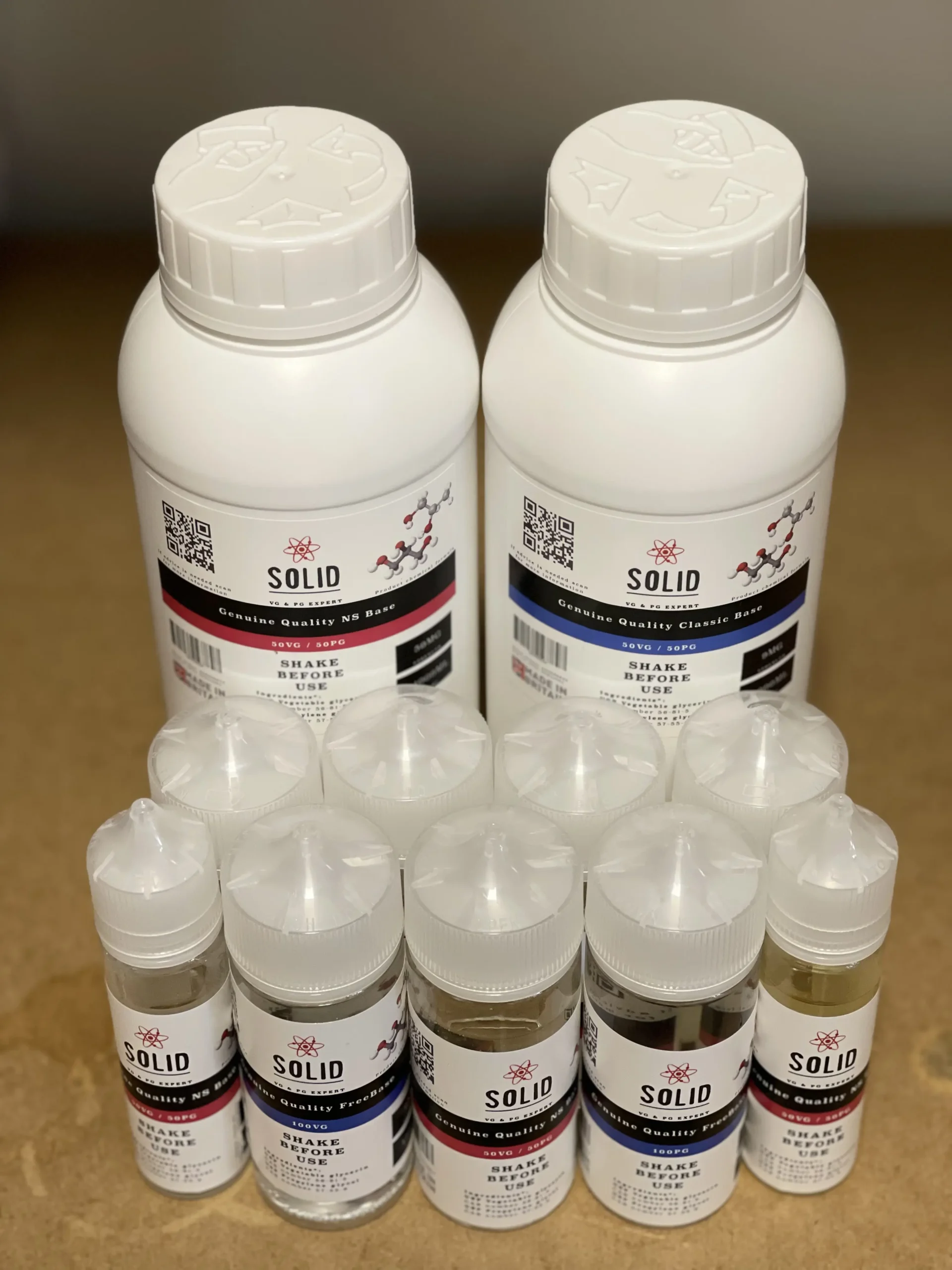
NS10 Base 50VG/50PG
A pre-nicotinised salt base, not a 10ml nicotine shot. Verify the selected volume and market access.
NS20 Base 50VG/50PG
A larger pre-nicotinised base format with customer and market eligibility to confirm.
The Salt Nicotine Shot 20mg N+ was listed at €3.70 but unavailable when checked on 15 August 2026. Browse the current range and live stock through the English salts category.
EU consumer refill rules
Article 20 of the EU Tobacco Products Directive requires nicotine-containing liquid placed on the consumer market in a dedicated refill container to stay at or below 20mg/ml and in a container no larger than 10ml. It also requires child- and tamper-proof products, protection against breakage and leakage, and a mechanism that supports leak-free refilling.
Furthermore, the packaging must carry specified information and warnings. Local implementation, sale channel, and customer eligibility still matter. Therefore, a catalogue listing does not by itself prove that every bottle size or strength is a consumer product in every destination country. The consolidated rule is available through EUR-Lex Article 20.
Seven nicotine-shot mistakes to avoid
- Assuming one full shot always creates 3mg/ml. Starting and final volume determine the result.
- Confusing mg with mg/ml. One is an amount, while the other is a concentration.
- Ignoring formulation. Classic and salt are different even when the printed strength matches.
- Ignoring VG/PG. The shot changes the final carrier ratio as well as nicotine strength.
- Pouring into a full bottle. The container needs enough spare capacity for every ingredient.
- Using an unlabelled bottle. Strength, formulation, date, and contents must remain identifiable.
- Leaving the product unsecured. A closed cap is not a substitute for safe, inaccessible storage.
The practical verdict
Overall, nicotine shots are convenient only when every field on the bottle enters the decision. Read formulation, mg/ml, volume, VG/PG, and intended use. Then calculate the final mixture, prepare a clean work area, measure accurately, close and label everything, and store the result securely.
Ultimately, “one shot” is a package size rather than a recipe. Use the dedicated calculation guide before mixing, and check current products in the nicotine salt bases category without assuming that all listed formats have the same legal status or purpose.
Frequently asked questions
What is a nicotine shot?
A nicotine shot is a small bottle of unflavoured nicotine liquid intended for a calculated dilution into a larger nicotine-free liquid. Check its formulation, mg/ml, volume, VG/PG ratio, and instructions before use.
Does one 10ml 20mg shot make 3mg e-liquid?
Not automatically. Added to 50ml of 0mg liquid, it creates 60ml containing 200mg nicotine, which equals approximately 3.33mg/ml. A different starting volume produces a different result.
Can a nicotine shot be vaped by itself?
A shot is sold as an unflavoured mixing component, not as a finished flavoured e-liquid. Use it only according to its label and a verified dilution calculation for compatible hardware.
What is the difference between classic and salt nicotine shots?
Classic shots contain freebase nicotine, while salt shots use nicotine formulated with an acid. The formulation can change the sensory profile, but the printed mg/ml still states the concentration.
How should nicotine shots be stored?
Keep them tightly closed, upright, clearly labelled, and secured away from children, pets, food, drink, heat, and direct light. Follow the product’s storage instructions and local rules.
What should I do after a nicotine-liquid spill?
Avoid direct contact, follow the product label, clean the area promptly, and wash exposed skin with soap and water. After swallowing, eye exposure, significant contact, or concerning symptoms, contact the appropriate poison centre or medical service.
Continue with nicotine-shot mixing
For adults who already use nicotine only. Nicotine is addictive and nicotine-containing liquid requires careful handling. Keep every bottle secured away from children and pets. Follow the product label and local law, and seek poison-centre or medical advice after ingestion, significant exposure, or concerning symptoms. This guide provides general product information rather than individual medical advice.